(09-02-2021 11:52 AM)BigTigerMike Wrote: …..And we’re back. Good Lord have mercy!
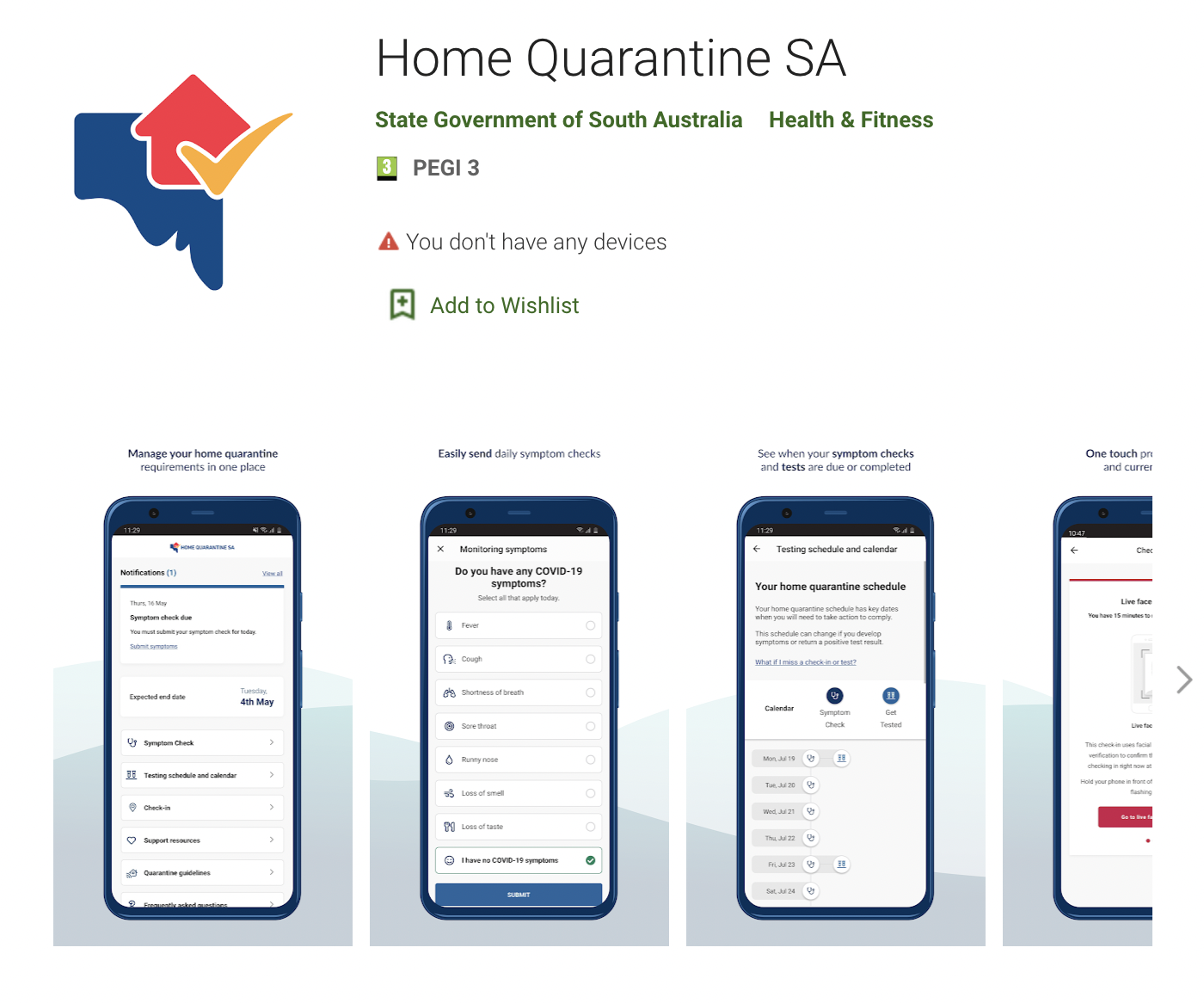
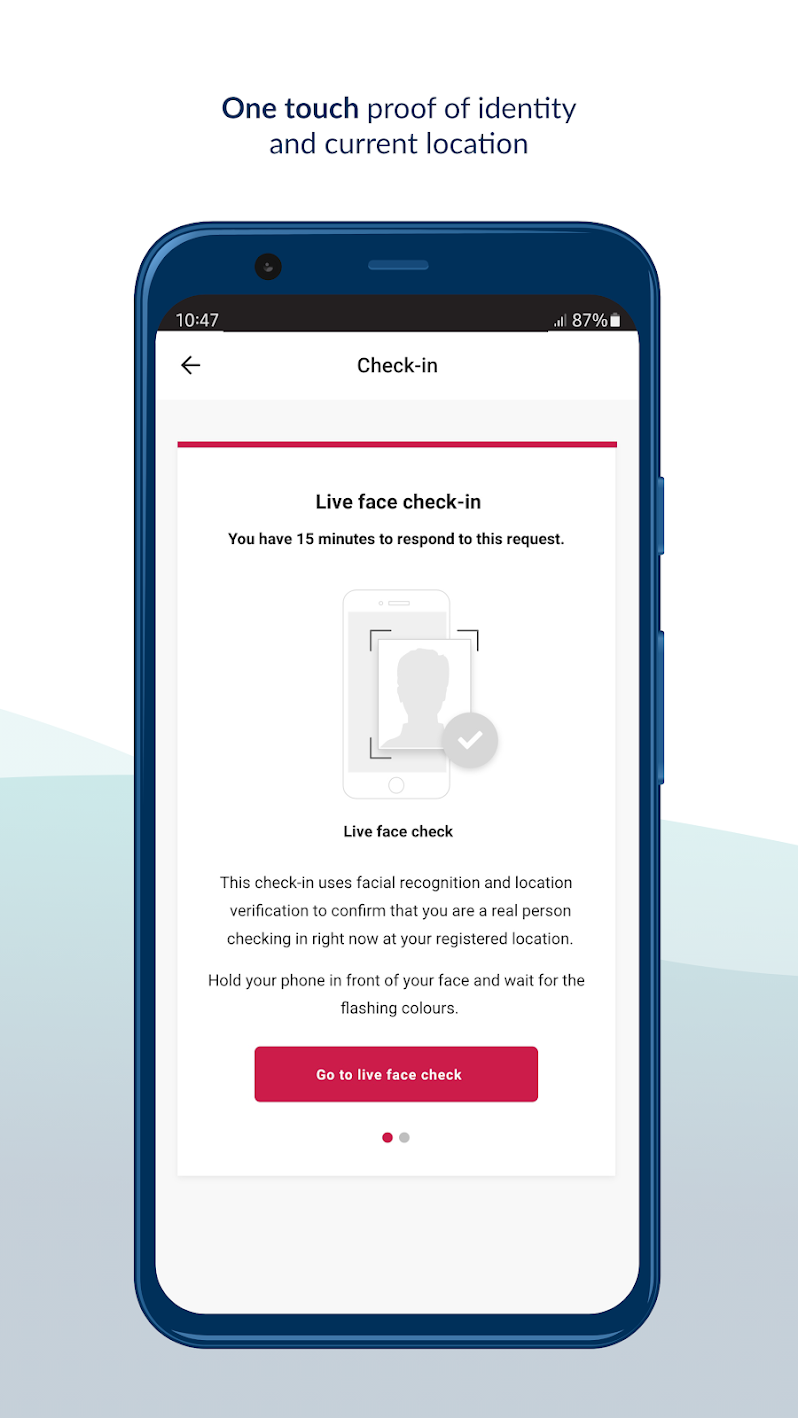
Quote:Intrastate travel within Australia is also severely restricted. And the government of South Australia, one of the country’s six states, developed and is now testing an app as Orwellian as any in the free world to enforce its quarantine rules. People in South Australia will be forced to download an app that combines facial recognition and geolocation. The state will text them at random times, and thereafter they will have 15 minutes to take a picture of their face in the location where they are supposed to be. Should they fail, the local police department will be sent to follow up in person. “We don’t tell them how often or when, on a random basis they have to reply within 15 minutes,” Premier Steven Marshall explained. “I think every South Australian should feel pretty proud that we are the national pilot for the home-based quarantine app.”
Quote:A well-known anti-vaxxer has livestreamed the moment she was pulled over and arrested by police outside her five kilometre radius.
Monica Smit, the founder of Reignite Democracy Australia, a movement aimed at protesting Covid lockdowns and vaccines, was stopped by police in Brighton in Melbourne’s southeast at about 1:20pm on Tuesday.
Ms Smit decided to pick up her phone and livestream the incident on Facebook to show her followers as evidence ‘just in case’.
‘I’ve just been pulled over by the cops, probably because I’m outside my 5km. But we’ll see what happens,’ Ms Smit said.
Prominent anti-vaxxer Monica Smit was pulled over by police on Tuesday in what she believed was due to her being outside her 5km radius
The anti-vaxxer looked frustrated and let out a large sigh as she waited in her vehicle for the police to address her.
As the police approached Ms Smit’s window, one officer said: ‘Hello Monica, how are you doing?’
The officers from Springvale Police Station then informed Ms Smit they needed to place her under arrest for a matter of incitement.
Completely shocked by the arrest, Mr Smit asked: ‘Have you guys been following me?’
The anti-vaxxer decided to livestream the arrest to her followers on Facebook and was subsequently arrested by the officers for incitement
The officers continued to tell her that anything she said may be used as evidence in court and asked if she understood.
‘No comment,’ Ms Smit said.
Before officers ended the video, Ms Smit urged her followers to share the video on social media as much as possible.
A Victoria police spokesperson confirmed in a statement that a 31-year-old Pakenham woman had been charged following an investigation into alleged online incitement of persons to breach the state’s Chief Health Officer’s directions.
‘Police subsequently executed search warrants at residences in Pakenham and Hampton,’ a police spokesperson said.
‘The woman has since been charged with two counts of incitement and three counts of breaching the Chief Health Officer’s Directions and remanded to face Melbourne Magistrates’ Court on September 1.’
The anti-vaccine and anti-lockdown group shared a statement from Ms Smit’s parents to their followers on Facebook on Wednesday morning.
Ms Smit’s parents said: ‘Thank you ALL for your kind thoughts, words and especially your prayers! We’re dealing with a ‘broken system’.’
‘We hope, pray and keep strong.’
A Victoria Police spokesperson confirmed a 31-year-old had been charged following an investigation into online incitement and would face court on Thursday
Quote:Europe and North America may still be enjoying something that may turn into yet another swan song of people believing the COVID pandemic restrictions are by and large behind us.
At least, the (frail) hope in the Northern Hemisphere is that the worst of the lockdown regimes are behind us, with some less invasive restrictions either gone, or likely to make a comeback at some point.
But Down Under, in Australia, lockdowns have been in full force in certain areas of the country for some weeks, if not months now. At the same time, Australia has not had the best record of reacting to the pandemic – some of its states went as far as retroactively rewriting the law in order to justify draconian COVID restrictions imposed on citizens, coupled with incidents when data collected by “Covid tracing apps” was essentially illegally shared with law enforcement.
None of that seems to have cautioned local government legislators to proceed more carefully going forward. In fact, as reports suggest, some of the country’s states, like South Australia (SA), just keep doubling down.
And so geolocation and facial recognition of citizens are both used as a way this state wants to make sure everyone is compliant with its policies.
The app’s name is Home Quarantine SA, and according to reports, all SA residents have been ordered to download it.
We often talk about China as a “role model” for any burgeoning mass-scale population control regime. But could this be one time when an Australian state is giving China a run for its money?
“The app ensures citizens comply with quarantine orders by contacting people at random and asking them to provide proof of their location within 15 minutes. Citizens then share their location with the government or provide ‘live face check-ins’ to confirm they are at their ‘registered quarantine address’,” media reports described the way the app is presented in app stores.
Elsewhere in Australia’s “Covid hinterland” – these rules still apply in the said state – people can be sent to Covid camps (“quarantine hotels”) or their own home by either health or law enforcement officials, for two weeks at a time.
Those who break this rule, might have to pay up to a $1,000 fine.
(09-04-2021 09:08 AM)Fo Shizzle Wrote: Sad to see a country that evolved from people that were basically exiled there by the crown become so Fascist. How did this happen?
They gave up their guns. Every society that has done so in history has slipped downhill into totalitarianism, and quickly.
Once a population gives up an ability to defend itself, it’s nearly impossible to go back.
Quote:Daniel Andrews has warned that unvaccinated Victorians may be “locked out” of venues and events when the state reaches its targets for reopening.
“When we get to those [70 and 80%] vaccination double-dose thresholds … the notion of a lockout of the whole community is far less relevant,” the Victorian premier said on Friday.
“What will become a bigger part of our response is a lockout of many venues for those who are not vaccinated.
“I am not going to lock the whole state down to protect people who would not protect themselves. If you are not vaccinated, and you could be, the chances of you booking a ticket at a sporting event, going to a pub … will be very limited.”
Andrews said “more changes” to restrictions would be announced, including the possibility of further freedoms outdoors, once 70% of Victorians had been administered a vaccine.
Victoria is more than halfway to its target of 1m jabs in five weeks, with 58.1% of eligible Victorians to have received their first dose.
“We are still obviously a number of days away from being at that milestone … of 70% single dose but … the quicker we get to 70%, the more vaccinations undertaken, the more we will be able to make those changes announced the other day,” Andrews said.
“Noting it was a modest list because it was considered safe by the chief health officer. But there may be things, like outdoors, which will be looked at.”
There were 208 locally acquired cases announced on Friday, and one case detected in hotel quarantine, with the source of 112 cases still under investigation. Health authorities did not confirmed how many cases had been in isolation throughout their infectious period.
There was one further Covid death, a man in his 60s from Altona North with an unknown vaccination status.
Just two further cases were detected in the regional city of Shepparton after 6,000 day-13 test results overnight, placing regional Victoria on track to ease restrictions from next week.
A home-based quarantine pilot in Victoria has been flagged as a way to get Victorians stranded in New South Wales back home with the use of technology and testing.
The Covid response commander, Jeroen Weimar, said he expected the Shepparton outbreak – currently sitting at 132 cases – would be extinguished in the coming days, but was concerned about workplace transmission in metropolitan Melbourne.
There is a growing outbreak in Melbourne’s northern suburbs, with 48 cases detected overnight, as well as positive wastewater testing in Melbourne’s south and south-east.
Twenty cases have been linked to a Box Hill construction centre and 17 positive cases detected in a St Kilda call centre.
“They are providing essential goods and services that keep everyone going, but if you are an employer, check your Covid-safe plan and make sure you’re doing everything you need to keep your workplace safe and your business safe because now we are at a level of transmission that you cannot trust people coming in are OK,” Weimar said.
“We need to ensure they come forward and get tested to minimise the risk of infection as the remaining workplaces open.”
There were 64 people being treated with Covid in hospital on Friday, including 60 people in intensive care and 11 on a ventilator. Just under a third of those hospitalised were aged under 40.
Victoria’s priority program to administer at least one Pfizer vaccine to all year 12s in the lead-up to final exams will begin from next Tuesday.
The program will run until 17 September, with a number of pop-up hubs to be established at existing schools.
There will be about 50,000 priority appointments for year 12s, to be made available from Monday 6 September.
“Schools will reach out to those senior students and have that discussion about making bookings,” Andrews said. “They will have priority access to appointments and priority treatment when they turn up at a state clinic.”
Andrews said testing and improving ventilation in classrooms would be key to reducing the risk of transmission when schools eventually opened up, as well as increasing outdoor learning spaces.
While the prospect of zero cases had been abandoned, Andrews said ongoing restrictions were needed to keep numbers as low as possible as vaccination rates improved.
“In some respect we have to try even harder and I know that Victorians are giving so much and I am deeply grateful and proud of that,” he said.
“We are going to see cases rise. This is undeniable, but we have to slow the rate of increase. We need to see them go up as modestly and slowly as possible.”
There are 50,000 AstraZeneca vaccine appointments available over the coming three weeks, after the wait time to be fully dosed with the vaccine was halved from 12 weeks to six.
Quote:A new law gives Australian police unprecedented powers for online surveillance, data interception and altering data. These powers, outlined in the Surveillance Legislation Amendment (Identify and Disrupt) Bill, raise concerns over potential misuse, privacy and security.
The bill updates the Surveillance Devices Act 2004 and Telecommunications (Interception and Access) Act 1979. In essence, it allows law-enforcement agencies or authorities (such as the Australian Federal Police and the Australian Criminal Intelligence Commission) to modify, add, copy or delete data when investigating serious online crimes.
The Human Rights Law Centre says the bill has insufficient safeguards for free speech and press freedom. Digital Rights Watch calls it a “warrantless surveillance regime” and notes the government ignored the recommendations of a bipartisan parliamentary committee to limit the powers granted by the new law.
What’s more, legal hacking by law enforcement may make it easier for criminal hackers to illegally access computer systems via the same vulnerabilities used by the government.
What’s in the law?
The bill introduces three new powers for law-enforcement agencies:
“data disruption warrants” allow authorities to “disrupt data” by copying, deleting or modifying data as they see fit
“network activity warrants” permit the collection of intelligence from devices or networks that are used, or likely to be used, by subject of the warrant
“account takeover warrants” let agencies take control of an online account (such as a social media account) to gather information for an investigation.
There is also an “emergency authorisation” procedure that allows these activities without a warrant under certain circumstances.
How is this different to previous laws?
Previous legislation, such as the Telecommunications (Interception and Access) Act 1979 and the Telecommunications Act 1997, contained greater privacy protections. Those laws, and others such as the Surveillances Devices Act 2004, do permit law-enforcement agencies to intercept or access communications and data under certain circumstances.
In our view, specific and targeted access to users’ information and activities may be needed to identify possible criminals or terrorists. In some cases, law enforcement agencies may need to modify, delete, copy or add content of users to prevent things like the distribution of child exploitation material. Lawful interception is key to protecting public and national security in the fight of global community against cybercrimes.
How does lawful data interception work?
“Lawful interception” is a network technology that allows electronic surveillance of communications, as authorised by judicial or administrative order. There are standards (which means regulations and rules) for telecommunication and internet service providers to achieve this, such as those recommended by the European Telecommunications Standards Institute.
Law-enforcement agencies may require service providers to hand over copies of communications data, decrypted data, or intercepted data without notifying users. Service providers may also have to make available analytical tools such as graphs or charts of target behaviours.
What are the privacy concerns?
The Office of the Australian Information Commissioner and others have also raised privacy concerns. The bill may impact third parties who are not suspected in the investigation of criminal activities. In particular, the bill can authorise access to third party computers, communication and data.
The Human Rights Law Centre argues the proposed broad powers can potentially compel any individual with relevant knowledge of the targeted computer or network to conduct hacking activities. In some cases this may clash with an individual’s right to freedom from self-incrimination.
Enabling law enforcement agencies to modify potential evidence in a criminal proceeding is also a major issue of concern. The detection and prevention of inappropriate data disruption will be a key issue.
The implementation of the new warrants needs to be in line with Privacy Act 1988 which was introduced to promote and protect the privacy of individuals and to regulate Australian government agencies and organisations. Where some agencies may have exemption against the Privacy Act, it is important to balance between public safety and privacy impacts.
What are the security issues and impacts?
The Identify and Disrupt Bill is a part of an extensive set of Australian digital surveillance laws, including the Telecommunications and Other Legislation Amendment (Assistance and Access) Act 2018 (TOLA), and the Telecommunications (Interception and Access) Amendment (Data Retention) Act 2015 (the Mandatory Metadata Retention Scheme).
Under the Identify and Disrupt Bill, access can be gained to encrypted data which could be copied, deleted, modified, and analysed even before its relevance can be determined. This significantly compromises users’ privacy and digital rights.
Modern encryption can be very hard to crack, so hackers often exploit other vulnerabilities in a system to gain access to unencrypted data. Governments too are reportedly using these vulnerabilities for their own lawful hacking.
Specifically, they depend on “zero-day exploits”, which use software vulnerabilities that are unknown to software vendors or developers, to hack into a system. These vulnerabilities could be exploited for months or even years before they are patched.
A conflict of interest may arise if law enforcement agencies are using zero-day exploits for lawful hacking. To protect citizens, we would expect these agencies to report or disclose any software vulnerabilities they discover to the software manufacturers so the weakness can be patched.
However, they may instead choose not to report them and use the vulnerabilities for their own hacking. This puts users at risk, as any third party, including criminal organisations, could exploit these so-called zero day vulnerabilities.
It’s not an abstract concern. In 2016, the CIA’s secret stash of hacking tools itself was stolen and published, highlighting the risk of these activities. The Chinese government has claimed the CIA was hacking targets in China for more than a decade using these and similar tools.
Government use of hacking tools may result in worse cyber security overall. The warrant powers given to Australian law enforcement agencies may protect public safety and national interests, but they may also provide powerful means for adversaries to access government data.
This includes the data and online accounts of targeted individuals like state officials, which may significantly impact national security. This possibility needs to be considered in light of the passing of the new bill.
Whilst the justification of the bill for public safety over personal privacy can be debatable, there is no doubt that the security aspects should not be undermined.
Quote:Residents in apartment blocks locked-down by NSW Health are having their alcohol deliveries policed as part of a policy to limit the number of drinks being consumed each day.
NSW Health has imposed rules limiting people in “NSW Health controlled buildings” to a certain amount of alcohol each day in a bid to “ensure the safety of health staff and residents”.
Mission Australia’s Common Ground building in Camperdown is the latest building where occupants are subjected to the harsh rules.
Residents of the social housing estate have complained that care packages sent by friends and relatives have been searched before they are delivered.
“They are searching all bags and things coming into the building … They confiscated a series of gifts. So things like bottles of spirits, we weren’t allowed to have those and we still (aren’t),” Common Ground resident Robin Elhaj said.
Residents are allowed to receive a ration of one of the following: six beers or pre-mixed drinks, one bottle of wine, or one 375ml bottle of spirits.
Excess alcohol is being confiscated until lockdown rules are lifted.
Residents can consult with a clinician if they think they need more than the allowed limit.
A Sydney Local Health District spokeswoman confirmed the limits are in place in NSW Health’s Special Health Accomodation, where Covid-positive patients and close contacts are sent for isolation.
However it is unclear what powers NSW Health has to limit the delivery of alcohol to people isolating in their own homes; public health orders do not mention alcohol limits.

 /
Australia is lost