Hello There, Guest! Registered users see far less ads! Register today and join our virtual tailgate. (Login — Register)

Post Reply 
Thought patrol: What are we working with? My views on conference goals & strategies.
Author Message
The Beaver Online
Heisman
*

Posts: 7,343
Joined: Apr 2024
Reputation: 955
I Root For: Penn State
Location:
Post: #1
Thought patrol: What are we working with? My views on conference goals & strategies.
It seems logical to assume that everyone in college sports wants the same things and perhaps they do. But I would disagree, or say that different schools have emphasized different areas to focus on or are so far back that being the world's best school or school grouping just isn't going to come up. Here is where I see the conferences goals and aspirations today. I also include the strategies they have to attain them, plus the positives and negatives of their current situations in regards to reaching those goals. And they're all in order so priority 1 should, in theory, take priority over priority 2 if the two should be at odds. And, of course, this is P4 only, for the rest the goal is to just attempt to keep up.

I'll post a part two in a bit where I show what I think the conferences should each do in these situations, including realignment, of course, but the below is a good groundwork for why I will say what I will say.

Big Ten:

Lets start with the best conference, the Big Ten.

Priorities:
1) Increase the prestige of existing Big Ten members.
2) Maintain an advantage over the M2 and Big East.
3) Keep a lid on membership infighting and threats from within.
4) Maintain parity with/gain an edge over the SEC.
5) Make money.

Strategies:
1) Fill out a national footprint of prestigious schools.
2) Increase the value of the middle of the Big Ten's football via expanded playoff access (WCGs or 24 team playoff with reserved spaces for Big Ten teams.)
3) Introduce limited revenue bonuses for higher performing schools.

Advantages:
1) Massive 4 timezone footprint made of massive State Us from massive states.
2) Best monetization of the product through tv.
3) Largest and richest almni and booster classes have been unleashed post-House.
4) TV dominance of northern/northeastern sports the SEC chooses not to participate in.

Problems:

1) Academically prestigious candidates are all terrible at football with little active fan interest.
2) TV deal great for making money but bad at attracting eyes.
3) Newer programs do not neatly fit into Big 2/Little 10 divide, older schools do not know how to react to that.
4) Stuck in current CFP deal for better part of a decade, it is skewed heavily towards giving SEC teams access. (2 B1G champs in a row is a fluke, look who's been placing more teams *aka lottery tickets* into the playoff)
5) Cannot change CFP alone, would likely need either both M2 or the SEC to go along with their plans, but everyone else hates their plans.

Next up is the second best conference, the SEC.

Priorities:
1) Keep existing high levels of fan/alumni buy-in.
2) Win national championships (more than just football but football most important)
3) Make money.
4) Maintain or regain status of #1 league in college sports (all about the Big Ten, the rest don't even come up.)
5) Don't embarrass your schools.

Strategies:
1) Keep regional interest through local rivalries.
2) Close co-operation with Disney/ESPN on branding and marketing.
3) "Small but tall" athletic departments who compete at the top of every sport they sponsor.
4) Allowance for "creative scheduling" of OOC matches later in the year, both OOC rivalries and buy games.

Advantages:
1) CFP status quo favors the SEC, if all else fails no change is advantageous to them vis a vis the Big Ten.
2) Regional rivalries that have been built over 100 years, most with balanced results and decent chance of either team winning.
3) Warm weather that is naturally conductive towards finding athletic talent locally.
4) "Culture of attendance" shows through on tv and makes for a better viewing experience at home, even for viewers who do not care about either team.
5) Can choose when and where to schedule their best games through co-op with Disney, no "Big Noon" here.
6) Schools are, with one or two exceptions, broadly similar and seem to be on the same page in most areas.
6) Defacto dominance of "southern sports" that the Big Ten cannot adequately compete in. Baseball, track, maybe a select few others.

Problems:
End of 4 OOC games coming next year ("Win Natties" took a back seat to "Make Money" this time and I'm still not sure why)
Temporary(?) removal of restrictions on NIL/legalized bagmen has let other teams take southern talent.
The Disney deal is great for fans, less ideal for payouts to teams.

Next is the ACC which, for now anyway, is clearly the third best league in college sports.

Priorities:
1) Keep the band together.
2) Retain official status of equality with the P2.
3) Win football and basketball championships.
4) Maintain member schools' prestige, do not tarnish it through financial woes at member programs.

Strategies:
1) Unequal revenue sharing.
2) High exit fees, GoR stuff, etc.
3) All eggs in the basket of a few football teams.
4) A great history for older members, like UNC, to dare them to leave behind.

Advantages:
1) Have the only teams left outside of the P2 with P2-level fanbases.
2) SEC rivalries, ND deal, plus ND's Clemson and Stanford OOC deals, give very good inventory of OOC football and now with 9 in-conference games too.
3) Longterm media deal and GoR avoids the perils of renegotiation… for now.
4) "Have nots" understand the direness of their position and are willing to cave on unequal rev sharing, etc.
5) More academically prestigious and set up in better states than the Big XII.
6) Lots of potential for NIL with rich alumni bases at many schools.

Problems:
1) Top schools have made it clear: they want out.
2) By far the most desirable schools for both the Big Ten and SEC are ACC members.
3) The "northern wing" has done terribly on the field and crowds have abandoned them not just in the stands but on the air too.
4) The Norcal duo have the worst all sports travel geography in the US outside of, like, Hawaii.
5) Lack of "contribution parity": they have the 3 best fan bases of the M2 in their conference but also likely the three worst as well.

And lastly there's the Big XII, who outlasted the Pac in a surprise twist but still have a load of issues to deal with.

Priorities:
1) Retain official status of equality with the P2.
2) Make more money.
3) Build unity between old and new programs.

Strategies:
1) Build non-football revenue. (aka basketball, but other stuff too.)
2) Consideration of expansion even if not poached.
3) "Let your enemies defeat themselves."

Advantages:
1) With no truly great schools they are at less risk of being poached.
2) Built a nationwide footprint with few truly coast to coast flights, due to most teams being centrally located.
3) Tabula rasa for expansion, can go anywhere, take anyone from the G conferences, etc.

Problems:
1) Worst tv deal of the P4.
2) Even teams that do well (TTU, Utah, BYU, ISU, ASU, etc) have struggled to distinguish themselves in tv ratings. Its has not been clear until late in the year which Big XII teams were the ones to watch so national audiences have opted to watch none of them in '24 and '25.
3) Hard to monetize small state teams. Conference is in essence a grab bag of schools the P2 did not want.
4) Little shared history beyond various clumps of two schools here, three schools there, etc. Easy to leave a group like that.
(This post was last modified: 06-15-2026 12:02 PM by The Beaver.)
06-14-2026 05:41 PM
Find all posts by this user Quote this message in a reply
Advertisement


billybobby777 Offline
The REAL BillyBobby
*

Posts: 14,623
Joined: May 2013
Reputation: 755
I Root For: ECU, Army
Location: Houston dont sleepon
Post: #2
RE: Thought patrol: What are we working with? My views on conference goals & strat...
Big 10:
Problems: Rutgers and Maryland.
More problems: the 16 other schools that have to host games against Rutgers and Maryland. The lack of gate Rutgers and Maryland create for their opponents is an issue.
(This post was last modified: 06-14-2026 06:45 PM by billybobby777.)
06-14-2026 06:43 PM
Find all posts by this user Quote this message in a reply
46566 Offline
1st String
*

Posts: 1,622
Joined: Dec 2019
Reputation: 25
I Root For: Gonzaga
Location: California
Post: #3
RE: Thought patrol: What are we working with? My views on conference goals & strategies.

If I'm the ACC I'd have to ask is the Notre Dame deal viable long term. Would something like a full Uconn outweigh Notre Dame as a partial football add and Olympic sports. While it might be a wash for Olympic sports it probably be a drop in football quality. Though would the extra potential revenue from Uconn football move the needle? I know Duke vs Uconn basketball would sell. Of course you have to think about Big Ten or SEC expanding.
06-14-2026 07:10 PM
Find all posts by this user Quote this message in a reply
billybobby777 Offline
The REAL BillyBobby
*

Posts: 14,623
Joined: May 2013
Reputation: 755
I Root For: ECU, Army
Location: Houston dont sleepon
Post: #4
RE: Thought patrol: What are we working with? My views on conference goals & strat...
(06-14-2026 07:10 PM)46566 Wrote:  If I'm the ACC I'd have to ask is the Notre Dame deal viable long term. Would something like a full Uconn outweigh Notre Dame as a partial football add and Olympic sports. While it might be a wash for Olympic sports it probably be a drop in football quality. Though would the extra potential revenue from Uconn football move the needle? I know Duke vs Uconn basketball would sell. Of course you have to think about Big Ten or SEC expanding.

Any hope that UConn joins PAC in FB only still? What’s the skinny out there?
06-14-2026 08:04 PM
Find all posts by this user Quote this message in a reply
The Beaver Online
Heisman
*

Posts: 7,343
Joined: Apr 2024
Reputation: 955
I Root For: Penn State
Location:
Post: #5
RE: Thought patrol: What are we working with? My views on conference goals & strat...
(06-14-2026 06:43 PM)billybobby777 Wrote:  Big 10:
Problems: Rutgers and Maryland.
More problems: the 16 other schools that have to host games against Rutgers and Maryland. The lack of gate Rutgers and Maryland create for their opponents is an issue.

If you need your opponent to create the gate then you've already lost as far as I am concerned. Thankfully most Big Ten teams don't.
06-14-2026 08:07 PM
Find all posts by this user Quote this message in a reply
DFW HOYA Offline
Heisman
*

Posts: 7,299
Joined: May 2004
Reputation: 533
I Root For: Georgetown
Location: Dallas, TX
Post: #6
RE: Thought patrol: What are we working with? My views on conference goals & strat...
(06-14-2026 06:43 PM)billybobby777 Wrote:  Big 10:
Problems: Rutgers and Maryland.
More problems: the 16 other schools that have to host games against Rutgers and Maryland. The lack of gate Rutgers and Maryland create for their opponents is an issue.

Before someone says, "college presidents wouldn't do such a thing", it's the Big Ten and everything is on the table. Here's the scenario: how much would the Big Ten realistically need to offer Rutgers and Maryland if they asked them to withdraw from the conference?
06-14-2026 08:23 PM
Visit this user's website Find all posts by this user Quote this message in a reply
Advertisement


46566 Offline
1st String
*

Posts: 1,622
Joined: Dec 2019
Reputation: 25
I Root For: Gonzaga
Location: California
Post: #7
RE: Thought patrol: What are we working with? My views on conference goals & strat...
(06-14-2026 08:04 PM)billybobby777 Wrote:  
(06-14-2026 07:10 PM)46566 Wrote:  If I'm the ACC I'd have to ask is the Notre Dame deal viable long term. Would something like a full Uconn outweigh Notre Dame as a partial football add and Olympic sports. While it might be a wash for Olympic sports it probably be a drop in football quality. Though would the extra potential revenue from Uconn football move the needle? I know Duke vs Uconn basketball would sell. Of course you have to think about Big Ten or SEC expanding.

Any hope that UConn joins PAC in FB only still? What’s the skinny out there?

I honestly think Sacramento State gets the football only invite if they can get it's stadium upgrades and just show proof of life during their early FBS days. They got a full schedule next season, 10 gain 27 (FCS game scheduled) and 10 in 28 (no FCS yet). So they need 2 FBS games in 27 and a FCS + FBS game in 28 for a full schedule. They are almost guaranteed Indy for the next 3 years. 29 has 7 games scheduled currently. That's probably the first chance on any movement.

Edit: my bad I thought Delaware was FCS. They have a choice for FCS in 27 also instead of 2 FBS games
(This post was last modified: 06-14-2026 08:33 PM by 46566.)
06-14-2026 08:32 PM
Find all posts by this user Quote this message in a reply
PicksUp Offline
All American
*

Posts: 3,609
Joined: Mar 2018
Reputation: 287
I Root For: UTEP, Texas
Location:
Post: #8
RE: Thought patrol: What are we working with? My views on conference goals & strat...
(06-14-2026 08:07 PM)The Beaver Wrote:  
(06-14-2026 06:43 PM)billybobby777 Wrote:  Big 10:
Problems: Rutgers and Maryland.
More problems: the 16 other schools that have to host games against Rutgers and Maryland. The lack of gate Rutgers and Maryland create for their opponents is an issue.

If you need your opponent to create the gate then you've already lost as far as I am concerned. Thankfully most Big Ten teams don't.

How many seats do away teams get 4-5k? That is nothing. Might be 5k in the SEC but most schools have over 80k stadiums and the top schools have over 100k.
06-14-2026 08:48 PM
Find all posts by this user Quote this message in a reply
bullet Offline
Legend
*

Posts: 83,874
Joined: Apr 2012
Reputation: 5067
I Root For: Texas, UK, UGA
Location:
Post: #9
RE: Thought patrol: What are we working with? My views on conference goals & strat...
(06-14-2026 08:23 PM)DFW HOYA Wrote:  
(06-14-2026 06:43 PM)billybobby777 Wrote:  Big 10:
Problems: Rutgers and Maryland.
More problems: the 16 other schools that have to host games against Rutgers and Maryland. The lack of gate Rutgers and Maryland create for their opponents is an issue.

Before someone says, "college presidents wouldn't do such a thing", it's the Big Ten and everything is on the table. Here's the scenario: how much would the Big Ten realistically need to offer Rutgers and Maryland if they asked them to withdraw from the conference?

Well they wouldn't because they love the access Rutgers and Maryland give them to the wealthy alumni of the rest of the Big Ten living in NYC and DC. And it probably helps to be there for lobbying for research dollars as well.
06-14-2026 09:14 PM
Find all posts by this user Quote this message in a reply
The Beaver Online
Heisman
*

Posts: 7,343
Joined: Apr 2024
Reputation: 955
I Root For: Penn State
Location:
Post: #10
RE: Thought patrol: What are we working with? My views on conference goals & strategies.
Alright then, let me finish my thought.

So what does the Big Ten do, then? They want to improve their schools' prestige, which would mean schools like Cal and Stanford, UVA too. UNC would complete the quad. But the truth is that those schools fly in the face of all of the conference's other goals. They do not help it make money if taken in full, do not help it gain an advantage over the SEC, beyond perhaps UNC and UVA in full. Perhaps a balanced approach, where a single school from Northern California is taken, along with a single prestigious school from the southern coast, could better thread that needle. Then, if the nay-sayers are sufficiently placated they can circle back for the second norcal twin (likely Cal, if we're being honest) and pair them with whichever the best remaining team in the southeast is (likely Miami, depending on what the SEC does but NCST and GT both offer positives of their own, along with Duke if both of the teams I mentioned previously are taken by the SEC.)

Beyond expansion the Big Ten has huge trouble with "load bearers" versus "free riders" simmering just beneath (and sometimes on) the surface. We've seen it in the latest round of expansion where sources at schools like Penn State were comfortable going off the record to oppose the PNW 2 as well in the failed PI deal where schools were openly fighting about which "tier" they belonged in. You don't see this in the SEC and Big XII, where schools are relatively flat, only in the more stratified conferences like the Big 10, the ACC, the old MWC, etc. That they had to go with stratified payments in that PI deal means, to me, that the Rubicon has been crossed and that will be part of the next media deal. Of course, this also means that they might be a less attractive destination for schools that are lucky enough to get a choice of conferences. UNC likely, at least, could claim middle tier in the Big Ten but could UVA? GT? Duke? I sincerely doubt it. Stanford and Cal likely in the bottom tier too but the SEC isn't sending them roses so oh well.

In regards to their much balleyhooed quest for relevance among the middle schools of the Big Ten in football, I just don't see it going anywhere in the time of the current deal. Their latest push (24 teams) seems to have fizzled out due to being unable to get the three sides (B1G, SEC and M2) to agree. They can work something out that the SEC would find acceptable, or something palatable to the M2, but they can't please all sides. The focus then, there, should be on what the CFP becomes after the current deal expires. Same with the basketball tournament, I suppose. My recommendation would be to pick the SEC as the main partner to please then and work something out with them, specifically, then tell the others to join or die. But that's six or so years away at this point.

And lastly, as the league with the largest and richest alumni bases the Big Ten should consider pushing for a higher limit on NIL caps, should those become an option. All teams are dealing with spending pressures in the post-House and post-Alston landscape but with more money available we can survive far better than the M2 and, at the highest level, compete with or even beyond most of the SEC. I don't think that has sunk in yet, and teams at the bottom like UMD, Rutgers, etc. are already in financial trouble. As said above, this is one of the Big Ten's issues, it is hard to fight for the whole league in the same way that a conference like the SEC, SBC or Big XII can.


Now then, about the SEC. So their main goal is to keep their high levels of engagement between their schools and their alumni bases and surrounding areas and their main way of doing that has been rivalry games and having a high level of competition in football. They could, in that sense, just forgo expansion and stay at 16. But from Disney's perspective there is still some money to be made from "promoting" other southeastern schools into the conference. So what are their choices then? They could seek to bring remaining OOC rivalries fully in-house. The main ones to consider are FSU vs Florida, Miami vs Florida (and FSU, should both be taken,) Georgia Tech versus both Georgia and Auburn, Clemson versus USC, Louisville vs Kentucky, Kansas vs Missouri and OSU vs Oklahoma. UNC, a second school of NCST and Duke, UVa and their rival V Tech (who I will be referring to as VPI from here on out) are all additive of southeastern markets though they have few if any ties to existing SEC schools. You can long list West Virginia and Texas Tech too, if you want, though neither would be top targets in my opinion. Of those mentioned schools I think we can safely discount Louisville, OSU, Kansas, WV, TTU and sadly VPI, who would need to not only come in with UVA but do so with UNC too and then somehow earn the nod as a second Virginia school over FSU as a second Florida school, Clemson as a second SC school with infinitely more fans, etc. So that leaves, from bottom to top geographically, Miami, Florida State, Georgia Tech, Clemson, UNC, Duke or NC State and Virginia as your choices.

The SEC seems to be sticking with full, equal payouts for all schools at this time, giving them first pick over the Big Ten. UNC seems to be consensus first choice among all pickers, so they get in first and even get to bring one rival with them. For the sake of JrSEC's stories we will say that they take Duke as their rival though maybe tides have changed and they'd want NC ST or UVA. For the sake of argument I don't think conferences are going to add more than four teams at a time and even then might space them out over a few years. So which of the remaining candidates have the most potential? Florida State, to me, is clearly the top choice of the rest, as they have a great rivalry with UF, are a great pick in their own right, are in a great state, would give the Big Ten an in to Florida if not chosen and just fit the bill of being an SEC team by all appearances. The other choices are, in my opinion, Clemson who are like FSU lite, GT, who are possibly highly under-rated with their two traditional SEC rivalries, great location in the Atlanta area, under-rated fanbase and, for whatever its worth, strong academic profile, and finally UVA as a second UNC rival who also provide you with a block on the Big Ten in a second potential market. I've been on the "UNC and FSU followed by Duke and Clemson a year later" train for awhile now but looking at it like this there's a real case to be made for going FSU, UNC, GT, NC's buddy school and omitting the Carolinian Tigers. Or going with Miami to have a third Florida team, possibly ditching the goatfeet all together for a lineup of FSU and GT followed by Clemson and Miami.

Though realignment is top of everyone's minds here its actually just one of many things conferences have to deal with. Their main goals beyond fan support for member schools were all about athletic dominance while building up a veneer of respectability. Things they could do to help here include adding UNC, which is one of the nation's most historically successful athletic programs, beefing up basketball with a UNC+Duke (or UNC+Kansas, etc.) combo, fighting for a restricted/traditional NIL system that lets them better use their innate geographic advantage more effectively or going the other way, tossing the door open and letting Texas, Texas A&M, Florida, Georgia and a few others carry the flag against the bagmen of the north. But their biggest advantage here is that the current CFP set-up advantages them alone at the expense of the other three relevant leagues. It gives all but five slots to at large teams and, in recent decades, the SEC has been far more effective than other conferences at dominating the top eleven. In that sense if they aren't given a dream deal by their negotiating partners they can just veto changes and keep the current system.

Many here have questioned, sometimes angrily, why they recently agreed to switch to a nine game IC schedule in exchange for a minor increase in the tv payout. Well, looking at my list of their priorities I think this helps explain why. It helps them with their number one goal, by giving teams three annual series to contend with plus, for many, a single OOC rivalry matchup for four (in theory) hype games per season. It also helps their number 3 (make money) and number 5 (don't embarrass yourselves) goals but does so at the expense of 2 (win natties) and 4 (gain or keep an advantage over the B1G.) Its a tricky balancing act, especially for the teams that feel they are being hurt more by this, but a look at the numbers seems to point towards it being the right decision.

Its very late at night and I've been at this for hours. I'll finish the ACC surgery and Big XII purgatory portions of this post tomorrow, likely while being paid in real life money by my in real life employer.
06-15-2026 01:11 AM
Find all posts by this user Quote this message in a reply
The Cutter of Bish Offline
Heisman
*

Posts: 8,832
Joined: Mar 2013
Reputation: 364
I Root For: the little guy
Location:
Post: #11
RE: Thought patrol: What are we working with? My views on conference goals & strat...
(06-14-2026 06:43 PM)billybobby777 Wrote:  Big 10:
Problems: Rutgers and Maryland.
More problems: the 16 other schools that have to host games against Rutgers and Maryland. The lack of gate Rutgers and Maryland create for their opponents is an issue.

For, you see, while schools like Pittsburgh, Syracuse, or Missouri would fit like a glove, they don't align or achieve the finely crafted, long-range strategic priorities set forth by highly decorated and world-renowned scholar leaders at some of the world's finest colleges and universities.

So, Rutgers and Maryland it is, you peasant. For they fit; we've thought this through! Just show up and shut up, because you just should.

(Brought to you by the same minds that created the Land-Grant Trophy as a replacement for PSU-Pitt.)

Manufactured regionalism...please make it stop.
06-15-2026 05:17 AM
Find all posts by this user Quote this message in a reply
Advertisement


thrill_house Offline
1st String
*

Posts: 1,123
Joined: Apr 2021
Reputation: 177
I Root For: Anti-CFP
Location:
Post: #12
RE: Thought patrol: What are we working with? My views on conference goals & strat...
(06-14-2026 08:48 PM)PicksUp Wrote:  How many seats do away teams get 4-5k? That is nothing. Might be 5k in the SEC but most schools have over 80k stadiums and the top schools have over 100k.

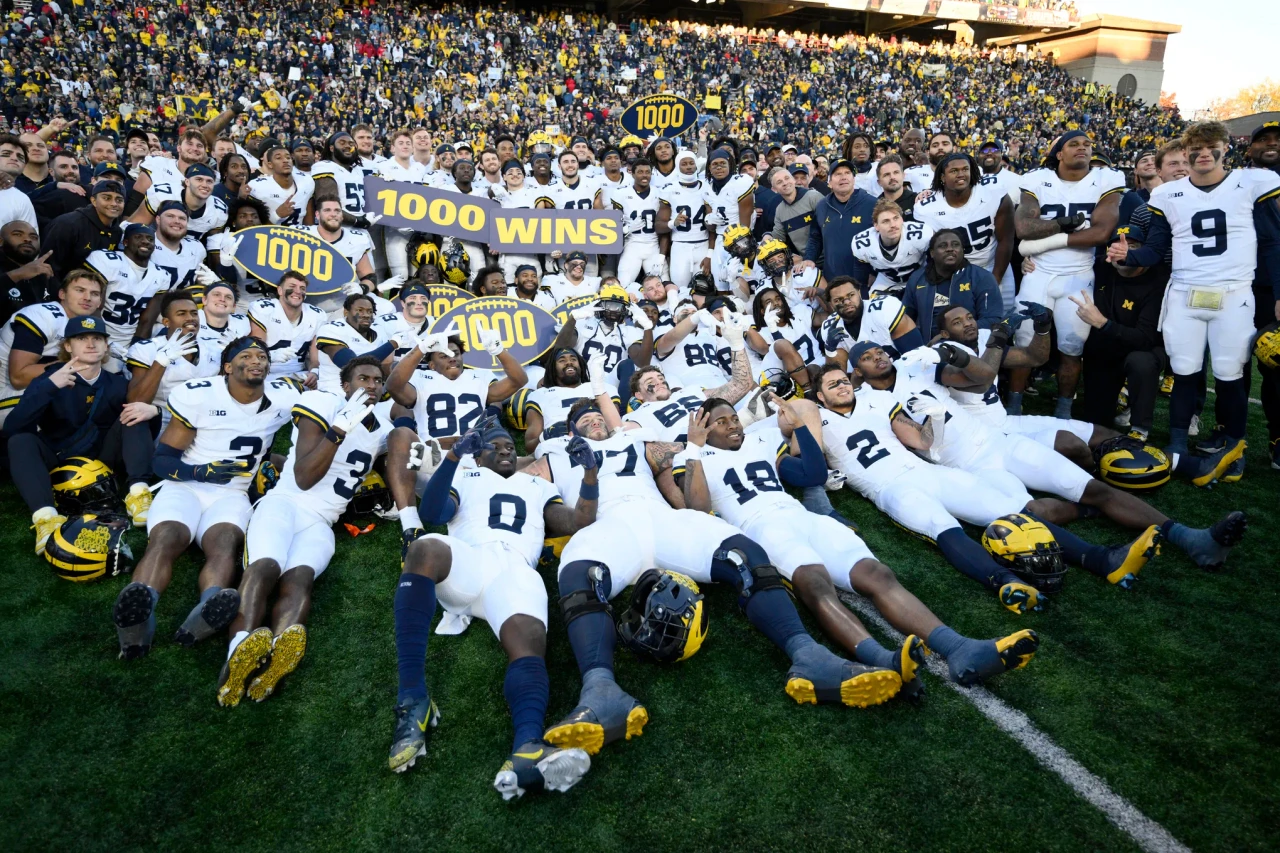
Depends entirely on the novelty of the match.

[Image: michigan-1000-wins.webp]

This image was taken from the Michigan @ Maryland game in 2023. There's a ton of Michigan alums in the DMV, as the school maintains a 51/49 in-state/out-of-state ratio, and the DMV is a hotbed for post-graduate employment.

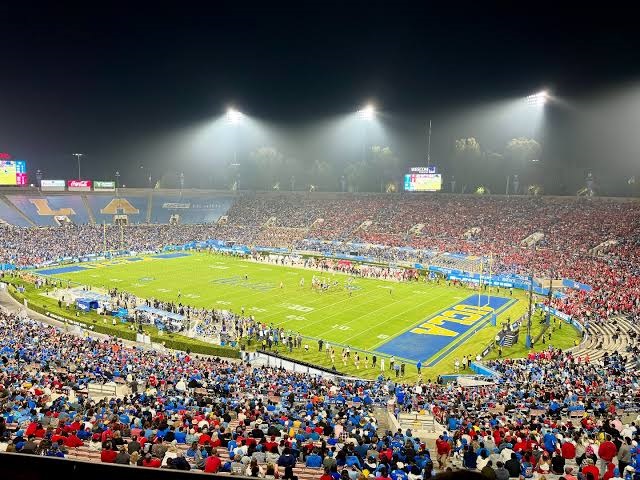
[Image: Nebraska-Rose-Bowl.jpg]

This was Nebraska's first trip to Pasadena since 2002. The Rose Bowl is still the cathedral of college football, and there's a large chunk of fans who have "watch (my favorite team) play in Pasadena" on their bucket list.
06-15-2026 09:32 AM
Find all posts by this user Quote this message in a reply
thrill_house Offline
1st String
*

Posts: 1,123
Joined: Apr 2021
Reputation: 177
I Root For: Anti-CFP
Location:
Post: #13
RE: Thought patrol: What are we working with? My views on conference goals & strat...
(06-14-2026 08:23 PM)DFW HOYA Wrote:  Before someone says, "college presidents wouldn't do such a thing", it's the Big Ten and everything is on the table. Here's the scenario: how much would the Big Ten realistically need to offer Rutgers and Maryland if they asked them to withdraw from the conference?

Don't pay attention to the outsiders; every school in the Big Ten is happy that Rutgers and Maryland are here.

They made every program in the conference better and added key television / recruiting markets to the conference. Without games in New Jersey, Michigan might not have landed Jabrill Peppers and Rashaun Gary: two players who springboarded the Harbaugh era.

Thanks to the additions of Rutgers and Maryland, all of Michigan and Penn State's would-be 7-9 win seasons in the 1990's and 2000's became 9-11 win seasons. From 2014-2023, Penn State went 18-2 against Rutgers and Maryland. The Wolverines nearly matched that accomplishment, posting a 17-2 record during the East / West era. Their addition saved 2 of the conference's 3 biggest brands.

Indiana was another beneficiary of Rutgers and Maryland being added to the conference. The Hoosiers went 10-10 against the duo from 2014-2023; which resulted in the Hoosiers going to 4 bowl games in 10 years in the pre-Cignetti era. In the 20 years preceding the additions, Indiana had gone to 1 bowl game. That one extra win is everything for some schools.
06-15-2026 10:02 AM
Find all posts by this user Quote this message in a reply
WhidbeyWolf Offline
1st String
*

Posts: 1,596
Joined: Jul 2025
Reputation: 242
I Root For: Wolfpack
Location: Olympic Shadow
Post: #14
RE: Thought patrol: What are we working with? My views on conference goals & strat...
(06-15-2026 01:11 AM)The Beaver Wrote:  Alright then, let me finish my thought.

So what does the Big Ten do, then? They want to improve their schools' prestige, which would mean schools like Cal and Stanford, UVA too. UNC would complete the quad. But the truth is that those schools fly in the face of all of the conference's other goals. They do not help it make money if taken in full, do not help it gain an advantage over the SEC, beyond perhaps UNC and UVA in full. Perhaps a balanced approach, where a single school from Northern California is taken, along with a single prestigious school from the southern coast, could better thread that needle. Then, if the nay-sayers are sufficiently placated they can circle back for the second norcal twin (likely Cal, if we're being honest) and pair them with whichever the best remaining team in the southeast is (likely Miami, depending on what the SEC does but NCST and GT both offer positives of their own, along with Duke if both of the teams I mentioned previously are taken by the SEC.)

Beyond expansion the Big Ten has huge trouble with "load bearers" versus "free riders" simmering just beneath (and sometimes on) the surface. We've seen it in the latest round of expansion where sources at schools like Penn State were comfortable going off the record to oppose the PNW 2 as well in the failed PI deal where schools were openly fighting about which "tier" they belonged in. You don't see this in the SEC and Big XII, where schools are relatively flat, only in the more stratified conferences like the Big 10, the ACC, the old MWC, etc. That they had to go with stratified payments in that PI deal means, to me, that the Rubicon has been crossed and that will be part of the next media deal. Of course, this also means that they might be a less attractive destination for schools that are lucky enough to get a choice of conferences. UNC likely, at least, could claim middle tier in the Big Ten but could UVA? GT? Duke? I sincerely doubt it. Stanford and Cal likely in the bottom tier too but the SEC isn't sending them roses so oh well.

In regards to their much balleyhooed quest for relevance among the middle schools of the Big Ten in football, I just don't see it going anywhere in the time of the current deal. Their latest push (24 teams) seems to have fizzled out due to being unable to get the three sides (B1G, SEC and M2) to agree. They can work something out that the SEC would find acceptable, or something palatable to the M2, but they can't please all sides. The focus then, there, should be on what the CFP becomes after the current deal expires. Same with the basketball tournament, I suppose. My recommendation would be to pick the SEC as the main partner to please then and work something out with them, specifically, then tell the others to join or die. But that's six or so years away at this point.

And lastly, as the league with the largest and richest alumni bases the Big Ten should consider pushing for a higher limit on NIL caps, should those become an option. All teams are dealing with spending pressures in the post-House and post-Alston landscape but with more money available we can survive far better than the M2 and, at the highest level, compete with or even beyond most of the SEC. I don't think that has sunk in yet, and teams at the bottom like UMD, Rutgers, etc. are already in financial trouble. As said above, this is one of the Big Ten's issues, it is hard to fight for the whole league in the same way that a conference like the SEC, SBC or Big XII can.


Now then, about the SEC. So their main goal is to keep their high levels of engagement between their schools and their alumni bases and surrounding areas and their main way of doing that has been rivalry games and having a high level of competition in football. They could, in that sense, just forgo expansion and stay at 16. But from Disney's perspective there is still some money to be made from "promoting" other southeastern schools into the conference. So what are their choices then? They could seek to bring remaining OOC rivalries fully in-house. The main ones to consider are FSU vs Florida, Miami vs Florida (and FSU, should both be taken,) Georgia Tech versus both Georgia and Auburn, Clemson versus USC, Louisville vs Kentucky, Kansas vs Missouri and OSU vs Oklahoma. UNC, a second school of NCST and Duke, UVa and their rival V Tech (who I will be referring to as VPI from here on out) are all additive of southeastern markets though they have few if any ties to existing SEC schools. You can long list West Virginia and Texas Tech too, if you want, though neither would be top targets in my opinion. Of those mentioned schools I think we can safely discount Louisville, OSU, Kansas, WV, TTU and sadly VPI, who would need to not only come in with UVA but do so with UNC too and then somehow earn the nod as a second Virginia school over FSU as a second Florida school, Clemson as a second SC school with infinitely more fans, etc. So that leaves, from bottom to top geographically, Miami, Florida State, Georgia Tech, Clemson, UNC, Duke or NC State and Virginia as your choices.

The SEC seems to be sticking with full, equal payouts for all schools at this time, giving them first pick over the Big Ten. UNC seems to be consensus first choice among all pickers, so they get in first and even get to bring one rival with them. For the sake of JrSEC's stories we will say that they take Duke as their rival though maybe tides have changed and they'd want NC ST or UVA. For the sake of argument I don't think conferences are going to add more than four teams at a time and even then might space them out over a few years. So which of the remaining candidates have the most potential? Florida State, to me, is clearly the top choice of the rest, as they have a great rivalry with UF, are a great pick in their own right, are in a great state, would give the Big Ten an in to Florida if not chosen and just fit the bill of being an SEC team by all appearances. The other choices are, in my opinion, Clemson who are like FSU lite, GT, who are possibly highly under-rated with their two traditional SEC rivalries, great location in the Atlanta area, under-rated fanbase and, for whatever its worth, strong academic profile, and finally UVA as a second UNC rival who also provide you with a block on the Big Ten in a second potential market. I've been on the "UNC and FSU followed by Duke and Clemson a year later" train for awhile now but looking at it like this there's a real case to be made for going FSU, UNC, GT, NC's buddy school and omitting the Carolinian Tigers. Or going with Miami to have a third Florida team, possibly ditching the goatfeet all together for a lineup of FSU and GT followed by Clemson and Miami.

Though realignment is top of everyone's minds here its actually just one of many things conferences have to deal with. Their main goals beyond fan support for member schools were all about athletic dominance while building up a veneer of respectability. Things they could do to help here include adding UNC, which is one of the nation's most historically successful athletic programs, beefing up basketball with a UNC+Duke (or UNC+Kansas, etc.) combo, fighting for a restricted/traditional NIL system that lets them better use their innate geographic advantage more effectively or going the other way, tossing the door open and letting Texas, Texas A&M, Florida, Georgia and a few others carry the flag against the bagmen of the north. But their biggest advantage here is that the current CFP set-up advantages them alone at the expense of the other three relevant leagues. It gives all but five slots to at large teams and, in recent decades, the SEC has been far more effective than other conferences at dominating the top eleven. In that sense if they aren't given a dream deal by their negotiating partners they can just veto changes and keep the current system.

Many here have questioned, sometimes angrily, why they recently agreed to switch to a nine game IC schedule in exchange for a minor increase in the tv payout. Well, looking at my list of their priorities I think this helps explain why. It helps them with their number one goal, by giving teams three annual series to contend with plus, for many, a single OOC rivalry matchup for four (in theory) hype games per season. It also helps their number 3 (make money) and number 5 (don't embarrass yourselves) goals but does so at the expense of 2 (win natties) and 4 (gain or keep an advantage over the B1G.) Its a tricky balancing act, especially for the teams that feel they are being hurt more by this, but a look at the numbers seems to point towards it being the right decision.

Its very late at night and I've been at this for hours. I'll finish the ACC surgery and Big XII purgatory portions of this post tomorrow, likely while being paid in real life money by my in real life employer.
That's a lot for these old eyes...but after you say the SEC takes Duke instead of NC State, you don't say where or how far State falls. Or you did, and I missed it.
I think we have good football value, which is what the money is following. The bolded State/GT part intrigues me. What are the comparative positives?
ETA: I see this is only Part 1. I'll need some sleep too. 04-cheers
(This post was last modified: 06-15-2026 10:26 AM by WhidbeyWolf.)
06-15-2026 10:22 AM
Find all posts by this user Quote this message in a reply
The Beaver Online
Heisman
*

Posts: 7,343
Joined: Apr 2024
Reputation: 955
I Root For: Penn State
Location:
Post: #15
RE: Thought patrol: What are we working with? My views on conference goals & strat...
(06-15-2026 10:22 AM)WhidbeyWolf Wrote:  
(06-15-2026 01:11 AM)The Beaver Wrote:  Alright then, let me finish my thought.

So what does the Big Ten do, then? They want to improve their schools' prestige, which would mean schools like Cal and Stanford, UVA too. UNC would complete the quad. But the truth is that those schools fly in the face of all of the conference's other goals. They do not help it make money if taken in full, do not help it gain an advantage over the SEC, beyond perhaps UNC and UVA in full. Perhaps a balanced approach, where a single school from Northern California is taken, along with a single prestigious school from the southern coast, could better thread that needle. Then, if the nay-sayers are sufficiently placated they can circle back for the second norcal twin (likely Cal, if we're being honest) and pair them with whichever the best remaining team in the southeast is (likely Miami, depending on what the SEC does but NCST and GT both offer positives of their own, along with Duke if both of the teams I mentioned previously are taken by the SEC.)

Beyond expansion the Big Ten has huge trouble with "load bearers" versus "free riders" simmering just beneath (and sometimes on) the surface. We've seen it in the latest round of expansion where sources at schools like Penn State were comfortable going off the record to oppose the PNW 2 as well in the failed PI deal where schools were openly fighting about which "tier" they belonged in. You don't see this in the SEC and Big XII, where schools are relatively flat, only in the more stratified conferences like the Big 10, the ACC, the old MWC, etc. That they had to go with stratified payments in that PI deal means, to me, that the Rubicon has been crossed and that will be part of the next media deal. Of course, this also means that they might be a less attractive destination for schools that are lucky enough to get a choice of conferences. UNC likely, at least, could claim middle tier in the Big Ten but could UVA? GT? Duke? I sincerely doubt it. Stanford and Cal likely in the bottom tier too but the SEC isn't sending them roses so oh well.

In regards to their much balleyhooed quest for relevance among the middle schools of the Big Ten in football, I just don't see it going anywhere in the time of the current deal. Their latest push (24 teams) seems to have fizzled out due to being unable to get the three sides (B1G, SEC and M2) to agree. They can work something out that the SEC would find acceptable, or something palatable to the M2, but they can't please all sides. The focus then, there, should be on what the CFP becomes after the current deal expires. Same with the basketball tournament, I suppose. My recommendation would be to pick the SEC as the main partner to please then and work something out with them, specifically, then tell the others to join or die. But that's six or so years away at this point.

And lastly, as the league with the largest and richest alumni bases the Big Ten should consider pushing for a higher limit on NIL caps, should those become an option. All teams are dealing with spending pressures in the post-House and post-Alston landscape but with more money available we can survive far better than the M2 and, at the highest level, compete with or even beyond most of the SEC. I don't think that has sunk in yet, and teams at the bottom like UMD, Rutgers, etc. are already in financial trouble. As said above, this is one of the Big Ten's issues, it is hard to fight for the whole league in the same way that a conference like the SEC, SBC or Big XII can.


Now then, about the SEC. So their main goal is to keep their high levels of engagement between their schools and their alumni bases and surrounding areas and their main way of doing that has been rivalry games and having a high level of competition in football. They could, in that sense, just forgo expansion and stay at 16. But from Disney's perspective there is still some money to be made from "promoting" other southeastern schools into the conference. So what are their choices then? They could seek to bring remaining OOC rivalries fully in-house. The main ones to consider are FSU vs Florida, Miami vs Florida (and FSU, should both be taken,) Georgia Tech versus both Georgia and Auburn, Clemson versus USC, Louisville vs Kentucky, Kansas vs Missouri and OSU vs Oklahoma. UNC, a second school of NCST and Duke, UVa and their rival V Tech (who I will be referring to as VPI from here on out) are all additive of southeastern markets though they have few if any ties to existing SEC schools. You can long list West Virginia and Texas Tech too, if you want, though neither would be top targets in my opinion. Of those mentioned schools I think we can safely discount Louisville, OSU, Kansas, WV, TTU and sadly VPI, who would need to not only come in with UVA but do so with UNC too and then somehow earn the nod as a second Virginia school over FSU as a second Florida school, Clemson as a second SC school with infinitely more fans, etc. So that leaves, from bottom to top geographically, Miami, Florida State, Georgia Tech, Clemson, UNC, Duke or NC State and Virginia as your choices.

The SEC seems to be sticking with full, equal payouts for all schools at this time, giving them first pick over the Big Ten. UNC seems to be consensus first choice among all pickers, so they get in first and even get to bring one rival with them. For the sake of JrSEC's stories we will say that they take Duke as their rival though maybe tides have changed and they'd want NC ST or UVA. For the sake of argument I don't think conferences are going to add more than four teams at a time and even then might space them out over a few years. So which of the remaining candidates have the most potential? Florida State, to me, is clearly the top choice of the rest, as they have a great rivalry with UF, are a great pick in their own right, are in a great state, would give the Big Ten an in to Florida if not chosen and just fit the bill of being an SEC team by all appearances. The other choices are, in my opinion, Clemson who are like FSU lite, GT, who are possibly highly under-rated with their two traditional SEC rivalries, great location in the Atlanta area, under-rated fanbase and, for whatever its worth, strong academic profile, and finally UVA as a second UNC rival who also provide you with a block on the Big Ten in a second potential market. I've been on the "UNC and FSU followed by Duke and Clemson a year later" train for awhile now but looking at it like this there's a real case to be made for going FSU, UNC, GT, NC's buddy school and omitting the Carolinian Tigers. Or going with Miami to have a third Florida team, possibly ditching the goatfeet all together for a lineup of FSU and GT followed by Clemson and Miami.

Though realignment is top of everyone's minds here its actually just one of many things conferences have to deal with. Their main goals beyond fan support for member schools were all about athletic dominance while building up a veneer of respectability. Things they could do to help here include adding UNC, which is one of the nation's most historically successful athletic programs, beefing up basketball with a UNC+Duke (or UNC+Kansas, etc.) combo, fighting for a restricted/traditional NIL system that lets them better use their innate geographic advantage more effectively or going the other way, tossing the door open and letting Texas, Texas A&M, Florida, Georgia and a few others carry the flag against the bagmen of the north. But their biggest advantage here is that the current CFP set-up advantages them alone at the expense of the other three relevant leagues. It gives all but five slots to at large teams and, in recent decades, the SEC has been far more effective than other conferences at dominating the top eleven. In that sense if they aren't given a dream deal by their negotiating partners they can just veto changes and keep the current system.

Many here have questioned, sometimes angrily, why they recently agreed to switch to a nine game IC schedule in exchange for a minor increase in the tv payout. Well, looking at my list of their priorities I think this helps explain why. It helps them with their number one goal, by giving teams three annual series to contend with plus, for many, a single OOC rivalry matchup for four (in theory) hype games per season. It also helps their number 3 (make money) and number 5 (don't embarrass yourselves) goals but does so at the expense of 2 (win natties) and 4 (gain or keep an advantage over the B1G.) Its a tricky balancing act, especially for the teams that feel they are being hurt more by this, but a look at the numbers seems to point towards it being the right decision.

Its very late at night and I've been at this for hours. I'll finish the ACC surgery and Big XII purgatory portions of this post tomorrow, likely while being paid in real life money by my in real life employer.
That's a lot for these old eyes...but after you say the SEC takes Duke instead of NC State, you don't say where or how far State falls. Or you did, and I missed it.
I think we have good football value, which is what the money is following. The bolded State/GT part intrigues me. What are the comparative positives?
ETA: I see this is only Part 1. I'll need some sleep too. 04-cheers

Well among other things I haven't talked about your conference yet. But if they aren't taken then they don't get taken, should be as easy as that. I did allude to them being on the Big Ten longboard the math really doesn't math for that, there's always going to be a Miami, GT or even Clemson getting in over them. Your best option is to get into whichever conference UNC prefers (the SEC, likely,) as their partner whether that means joining as a pair or unofficially being the next team in a year later when the payment fee drops.

This also isn't a dominoes thread. I mentioned realignment as a part of SEC strategy but it wasn't really the focus of the article. They seem likely to take one traditional UNC rival when taking the Heels and to them it likely doesn't really matter which as they all offer positives.
(This post was last modified: 06-15-2026 11:02 AM by The Beaver.)
06-15-2026 11:00 AM
Find all posts by this user Quote this message in a reply
JRsec Offline
Super Moderator
*

Posts: 44,978
Joined: Mar 2012
Reputation: 13521
I Root For: SEC
Location:
Post: #16
RE: Thought patrol: What are we working with? My views on conference goals & strat...
(06-14-2026 05:41 PM)The Beaver Wrote:  It seems logical to assume that everyone in college sports wants the same things and perhaps they do. But I would disagree, or say that different schools have emphasized different areas to focus on or are so far back that being the world's best school or school grouping just isn't going to come up. Here is where I see the conferences goals and aspirations today. I also include the strategies they have to attain them, plus the positives and negatives of their current situations in regards to reaching those goals. And they're all in order so priority 1 should, in theory, take priority over priority 2 if the two should be at odds. And, of course, this is P4 only, for the rest the goal is to just attempt to keep up.

I'll post a part two in a bit where I show what I think the conferences should each do in these situations, including realignment, of course, but the below is a good groundwork for why I will say what I will say.

Big Ten:

Lets start with the best conference, the Big Ten.

Priorities:
1) Increase the prestige of existing Big Ten members.
2) Maintain an advantage over the M2 and Big East.
3) Keep a lid on membership infighting and threats from within.
4) Maintain parity with/gain an edge over the SEC.
5) Make money.

Strategies:
1) Fill out a national footprint of prestigious schools.
2) Increase the value of the middle of the Big Ten's football via expanded playoff access (WCGs or 24 team playoff with reserved spaces for Big Ten teams.)
3) Introduce limited revenue bonuses for higher performing schools.

Advantages:
1) Massive 4 timezone footprint made of massive State Us from massive states.
2) Best monetization of the product through tv.
3) Largest and richest almni and booster classes have been unleashed post-House.
4) TV dominance of northern/northeastern sports the SEC chooses not to participate in.

Next up is the second best conference, the SEC.

Priorities:
1) Keep existing high levels of fan/alumni buy-in.
2) Win national championships (more than just football but football most important)
3) Make money.
4) Maintain or regain status of #1 league in college sports (all about the Big Ten, the rest don't even come up.)
5) Don't embarrass your schools.

Strategies:
1) Keep regional interest through local rivalries.
2) Close co-operation with Disney/ESPN on branding and marketing.
3) "Small but tall" athletic departments who compete at the top of every sport they sponsor.
4) Allowance for "creative scheduling" of OOC matches later in the year, both OOC rivalries and buy games.

Advantages:
1) CFP status quo favors the SEC, if all else fails no change is advantageous to them vis a vis the Big Ten.
2) Regional rivalries that have been built over 100 years, most with balanced results and decent chance of either team winning.
3) Warm weather that is naturally conductive towards finding athletic talent locally.
4) "Culture of attendance" shows through on tv and makes for a better viewing experience at home, even for viewers who do not care about either team.
5) Can choose when and where to schedule their best games through co-op with Disney, no "Big Noon" here.
6) Schools are, with one or two exceptions, broadly similar and seem to be on the same page in most areas.
6) Defacto dominance of "southern sports" that the Big Ten cannot adequately compete in. Baseball, track, maybe a select few others.

Problems:
End of 4 OOC games coming next year ("Win Natties" took a back seat to "Make Money" this time and I'm still not sure why)
Temporary(?) removal of restrictions on NIL/legalized bagmen has let other teams take southern talent.
The Disney deal is great for fans, less ideal for payouts to teams.

Next is the ACC which, for now anyway, is clearly the third best league in college sports.

Priorities:
1) Keep the band together.
2) Retain official status of equality with the P2.
3) Win football and basketball championships.
4) Maintain member schools' prestige, do not tarnish it through financial woes at member programs.

Strategies:
1) Unequal revenue sharing.
2) High exit fees, GoR stuff, etc.
3) All eggs in the basket of a few football teams.
4) A great history for older members, like UNC, to dare them to leave behind.

Advantages:
1) Have the only teams left outside of the P2 with P2-level fanbases.
2) SEC rivalries, ND deal, plus ND's Clemson and Stanford OOC deals, give very good inventory of OOC football and now with 9 in-conference games too.
3) Longterm media deal and GoR avoids the perils of renegotiation… for now.
4) "Have nots" understand the direness of their position and are willing to cave on unequal rev sharing, etc.
5) More academically prestigious and set up in better states than the Big XII.
6) Lots of potential for NIL with rich alumni bases at many schools.

Problems:
1) Top schools have made it clear: they want out.
2) By far the most desirable schools for both the Big Ten and SEC are ACC members.
3) The "northern wing" has done terribly on the field and crowds have abandoned them not just in the stands but on the air too.
4) The Norcal duo have the worst all sports travel geography in the US outside of, like, Hawaii.
5) Lack of "contribution parity": they have the 3 best fan bases of the M2 in their conference but also likely the three worst as well.

And lastly there's the Big XII, who outlasted the Pac in a surprise twist but still have a load of issues to deal with.

Priorities:
1) Retain official status of equality with the P2.
2) Make more money.
3) Build unity between old and new programs.

Strategies:
1) Build non-football revenue. (aka basketball, but other stuff too.)
2) Consideration of expansion even if not poached.
3) "Let your enemies defeat themselves."

Advantages:
1) With no truly great schools they are at less risk of being poached.
2) Built a nationwide footprint with few truly coast to coast flights, due to most teams being centrally located.
3) Tabula rasa for expansion, can go anywhere, take anyone from the G conferences, etc.

Problems:
1) Worst tv deal of the P4.
2) Even teams that do well (TTU, Utah, BYU, ISU, ASU, etc) have struggled to distinguish themselves in tv ratings. Its has not been clear until late in the year which Big XII teams were the ones to watch so national audiences have opted to watch none of them in '24 and '25.
3) Hard to monetize small state teams. Conference is in essence a grab bag of schools the P2 did not want.
4) Little shared history beyond various clumps of two schools here, three schools there, etc. Easy to leave a group like that.

What? No problems for the Big Ten? Everything I know of with a fat bottom has problems.
06-15-2026 11:18 AM
Find all posts by this user Quote this message in a reply
Advertisement


thrill_house Offline
1st String
*

Posts: 1,123
Joined: Apr 2021
Reputation: 177
I Root For: Anti-CFP
Location:
Post: #17
RE: Thought patrol: What are we working with? My views on conference goals & strat...
(06-14-2026 08:07 PM)The Beaver Wrote:  If you need your opponent to create the gate then you've already lost as far as I am concerned.

Oh please, if half these ACC / Big 12 teams had to endure your average American Athletic Conference schedule, which forces them to regularly play plastic weeknight games, they would also average 30,000 fans for their home games.

South Florida is the perfect case study.

USF's home attendance by conference affiliation (entire history)...

FCS Independent (1997-00): 27,452
FBS Independent (2001-02): 26,534
Conference USA (2003-04): 28,785
Big East (2005-12): 44,286
American (2014-present): 33,174

USF's home attendance (2016-present) vs. Power 4 Florida Schools (FSU, Miami, UCF) and Power 2 schools (Big Ten + SEC): 51,119

2024: Miami-FL 58,616
2023: Alabama 65,138
2022: UCF 32,317
2021: Florida 66,646
2019: Wisconsin 46,704
2018: UCF: 57,626
2017: Illinois 35,404
2016: Florida State 61,665
2016: UCF 36,056

They were just born in the wrong generation and weren't grandfathered into a conference with their should-be rivals (UF, FSU, Miami, UCF) like the majority of the Power 4.
06-15-2026 11:22 AM
Find all posts by this user Quote this message in a reply
JRsec Offline
Super Moderator
*

Posts: 44,978
Joined: Mar 2012
Reputation: 13521
I Root For: SEC
Location:
Post: #18
RE: Thought patrol: What are we working with? My views on conference goals & strat...
(06-15-2026 11:22 AM)thrill_house Wrote:  
(06-14-2026 08:07 PM)The Beaver Wrote:  If you need your opponent to create the gate then you've already lost as far as I am concerned.

Oh please, if half these ACC / Big 12 teams had to endure your average American Athletic Conference schedule, which forces them to regularly play plastic weeknight games, they would also average 30,000 fans for their home games.

South Florida is the perfect case study.

USF's home attendance by conference affiliation (entire history)...

FCS Independent (1997-00): 27,452
FBS Independent (2001-02): 26,534
Conference USA (2003-04): 28,785
Big East (2005-12): 44,286
American (2014-present): 33,174

USF's home attendance (2016-present) vs. Power 4 Florida Schools (FSU, Miami, UCF) and Power 2 schools (Big Ten + SEC): 51,119

2024: Miami-FL 58,616
2023: Alabama 65,138
2022: UCF 32,317
2021: Florida 66,646
2019: Wisconsin 46,704
2018: UCF: 57,626
2017: Illinois 35,404
2016: Florida State 61,665
2016: UCF 36,056

They were just born in the wrong generation and weren't grandfathered into a conference with their should-be rivals (UF, FSU, Miami, UCF) like the majority of the Power 4.
I liked the way you grouped those games against viable P2 and rival schools. It illustrates much more potential than USF is given on this forum.

Keep in mind the SEC averages 77,000 in attendance and the Big Ten averages 66,000. Now drop UCF and Illinois and look at where you are? Tampa/St.Pete can grow an audience plus matriculation of students to alumni gives USF a much higher ceiling than your full schedule will ever indicate.

I've long thought that if you put an SEC jersey patch on your uniform you would need to build a stadium or expand one to seat 80,000. What I like about USF is its location. The SEC needs a presence on the Gulf. You pair well with UF or Miami.

One of the super two conferences will eventually look at long range objectives instead of those of just the next media contract. It would take you less time to equal Big Ten attendance numbers, but you in the long run would make more money and make the SEC more money if landed with them.

The sad part to me is the need for immediate monetary gratification due to Alston and House both in terms of reparations and in terms of competing for top athletes. It makes immediate market and brand gratification more important to the conferences and networks than long range strategic planning. As I look at where things are headed in both numbers of college applicants, internal shifts in population among the lower 48, and in advancement in all STEM endeavors USF makes even more sense. I'll be glad when consolidation is done and we ditch the immediate need for shiny objects and began again to appreciate each tree in the forest instead of failing to see them because our interest is only in the vista and not the particular.
06-15-2026 11:38 AM
Find all posts by this user Quote this message in a reply
Morning MAC Offline
Bench Warmer
*

Posts: 120
Joined: Jan 2025
Reputation: 12
I Root For: Michigan ASU MAC
Location:
Post: #19
RE: Thought patrol: What are we working with? My views on conference goals & strat...
(06-14-2026 08:04 PM)billybobby777 Wrote:  
(06-14-2026 07:10 PM)46566 Wrote:  If I'm the ACC I'd have to ask is the Notre Dame deal viable long term. Would something like a full Uconn outweigh Notre Dame as a partial football add and Olympic sports. While it might be a wash for Olympic sports it probably be a drop in football quality. Though would the extra potential revenue from Uconn football move the needle? I know Duke vs Uconn basketball would sell. Of course you have to think about Big Ten or SEC expanding.

Any hope that UConn joins PAC in FB only still? What’s the skinny out there?

My pie in the sky hope is UConn FB only to the MAC, with the condition of
UConn and UMass attending a Mid American Hockey Classic (hosted somewhere
in Ohio, like Cleveland...)
Miami-OH, Western Michigan, Bowling Green, UCONN, UMASS, Ohio State
play a yearly tournament over the holidays.
Yes, hockey is not a MAC sport, but the competition would give the MAC more visibility in the college sports world.
06-15-2026 11:41 AM
Find all posts by this user Quote this message in a reply
The Beaver Online
Heisman
*

Posts: 7,343
Joined: Apr 2024
Reputation: 955
I Root For: Penn State
Location:
Post: #20
RE: Thought patrol: What are we working with? My views on conference goals & strat...
(06-15-2026 11:18 AM)JRsec Wrote:  
(06-14-2026 05:41 PM)The Beaver Wrote:  It seems logical to assume that everyone in college sports wants the same things and perhaps they do. But I would disagree, or say that different schools have emphasized different areas to focus on or are so far back that being the world's best school or school grouping just isn't going to come up. Here is where I see the conferences goals and aspirations today. I also include the strategies they have to attain them, plus the positives and negatives of their current situations in regards to reaching those goals. And they're all in order so priority 1 should, in theory, take priority over priority 2 if the two should be at odds. And, of course, this is P4 only, for the rest the goal is to just attempt to keep up.

I'll post a part two in a bit where I show what I think the conferences should each do in these situations, including realignment, of course, but the below is a good groundwork for why I will say what I will say.

Big Ten:

Lets start with the best conference, the Big Ten.

Priorities:
1) Increase the prestige of existing Big Ten members.
2) Maintain an advantage over the M2 and Big East.
3) Keep a lid on membership infighting and threats from within.
4) Maintain parity with/gain an edge over the SEC.
5) Make money.

Strategies:
1) Fill out a national footprint of prestigious schools.
2) Increase the value of the middle of the Big Ten's football via expanded playoff access (WCGs or 24 team playoff with reserved spaces for Big Ten teams.)
3) Introduce limited revenue bonuses for higher performing schools.

Advantages:
1) Massive 4 timezone footprint made of massive State Us from massive states.
2) Best monetization of the product through tv.
3) Largest and richest almni and booster classes have been unleashed post-House.
4) TV dominance of northern/northeastern sports the SEC chooses not to participate in.

Next up is the second best conference, the SEC.

Priorities:
1) Keep existing high levels of fan/alumni buy-in.
2) Win national championships (more than just football but football most important)
3) Make money.
4) Maintain or regain status of #1 league in college sports (all about the Big Ten, the rest don't even come up.)
5) Don't embarrass your schools.

Strategies:
1) Keep regional interest through local rivalries.
2) Close co-operation with Disney/ESPN on branding and marketing.
3) "Small but tall" athletic departments who compete at the top of every sport they sponsor.
4) Allowance for "creative scheduling" of OOC matches later in the year, both OOC rivalries and buy games.

Advantages:
1) CFP status quo favors the SEC, if all else fails no change is advantageous to them vis a vis the Big Ten.
2) Regional rivalries that have been built over 100 years, most with balanced results and decent chance of either team winning.
3) Warm weather that is naturally conductive towards finding athletic talent locally.
4) "Culture of attendance" shows through on tv and makes for a better viewing experience at home, even for viewers who do not care about either team.
5) Can choose when and where to schedule their best games through co-op with Disney, no "Big Noon" here.
6) Schools are, with one or two exceptions, broadly similar and seem to be on the same page in most areas.
6) Defacto dominance of "southern sports" that the Big Ten cannot adequately compete in. Baseball, track, maybe a select few others.

Problems:
End of 4 OOC games coming next year ("Win Natties" took a back seat to "Make Money" this time and I'm still not sure why)
Temporary(?) removal of restrictions on NIL/legalized bagmen has let other teams take southern talent.
The Disney deal is great for fans, less ideal for payouts to teams.

Next is the ACC which, for now anyway, is clearly the third best league in college sports.

Priorities:
1) Keep the band together.
2) Retain official status of equality with the P2.
3) Win football and basketball championships.
4) Maintain member schools' prestige, do not tarnish it through financial woes at member programs.

Strategies:
1) Unequal revenue sharing.
2) High exit fees, GoR stuff, etc.
3) All eggs in the basket of a few football teams.
4) A great history for older members, like UNC, to dare them to leave behind.

Advantages:
1) Have the only teams left outside of the P2 with P2-level fanbases.
2) SEC rivalries, ND deal, plus ND's Clemson and Stanford OOC deals, give very good inventory of OOC football and now with 9 in-conference games too.
3) Longterm media deal and GoR avoids the perils of renegotiation… for now.
4) "Have nots" understand the direness of their position and are willing to cave on unequal rev sharing, etc.
5) More academically prestigious and set up in better states than the Big XII.
6) Lots of potential for NIL with rich alumni bases at many schools.

Problems:
1) Top schools have made it clear: they want out.
2) By far the most desirable schools for both the Big Ten and SEC are ACC members.
3) The "northern wing" has done terribly on the field and crowds have abandoned them not just in the stands but on the air too.
4) The Norcal duo have the worst all sports travel geography in the US outside of, like, Hawaii.
5) Lack of "contribution parity": they have the 3 best fan bases of the M2 in their conference but also likely the three worst as well.

And lastly there's the Big XII, who outlasted the Pac in a surprise twist but still have a load of issues to deal with.

Priorities:
1) Retain official status of equality with the P2.
2) Make more money.
3) Build unity between old and new programs.

Strategies:
1) Build non-football revenue. (aka basketball, but other stuff too.)
2) Consideration of expansion even if not poached.
3) "Let your enemies defeat themselves."

Advantages:
1) With no truly great schools they are at less risk of being poached.
2) Built a nationwide footprint with few truly coast to coast flights, due to most teams being centrally located.
3) Tabula rasa for expansion, can go anywhere, take anyone from the G conferences, etc.

Problems:
1) Worst tv deal of the P4.
2) Even teams that do well (TTU, Utah, BYU, ISU, ASU, etc) have struggled to distinguish themselves in tv ratings. Its has not been clear until late in the year which Big XII teams were the ones to watch so national audiences have opted to watch none of them in '24 and '25.
3) Hard to monetize small state teams. Conference is in essence a grab bag of schools the P2 did not want.
4) Little shared history beyond various clumps of two schools here, three schools there, etc. Easy to leave a group like that.

What? No problems for the Big Ten? Everything I know of with a fat bottom has problems.

I absolutely listed problems for the Big Ten on my excel document I built this off of. I was writing the post after midnight, let me go back and edit them in.

edit: There, done, now off to breakfast.
(This post was last modified: 06-15-2026 12:03 PM by The Beaver.)
06-15-2026 12:00 PM
Find all posts by this user Quote this message in a reply
Post Reply 


User(s) browsing this thread: 1 Guest(s)


Copyright © 2002-2026 Collegiate Sports Nation Bulletin Board System (CSNbbs), All Rights Reserved.
CSNbbs is an independent fan site and is in no way affiliated to the NCAA or any of the schools and conferences it represents.
This site monetizes links. FTC Disclosure.
We allow third-party companies to serve ads and/or collect certain anonymous information when you visit our web site. These companies may use non-personally identifiable information (e.g., click stream information, browser type, time and date, subject of advertisements clicked or scrolled over) during your visits to this and other Web sites in order to provide advertisements about goods and services likely to be of greater interest to you. These companies typically use a cookie or third party web beacon to collect this information. To learn more about this behavioral advertising practice or to opt-out of this type of advertising, you can visit http://www.networkadvertising.org.
Powered By MyBB, © 2002-2026 MyBB Group.