Gitanole

Barista


Posts: 14,073
Joined: May 2016
Reputation: 2847
I Root For: Florida State
Location: Speared Turf |
RE: New Paradigm: Employment & Collective Bargaining
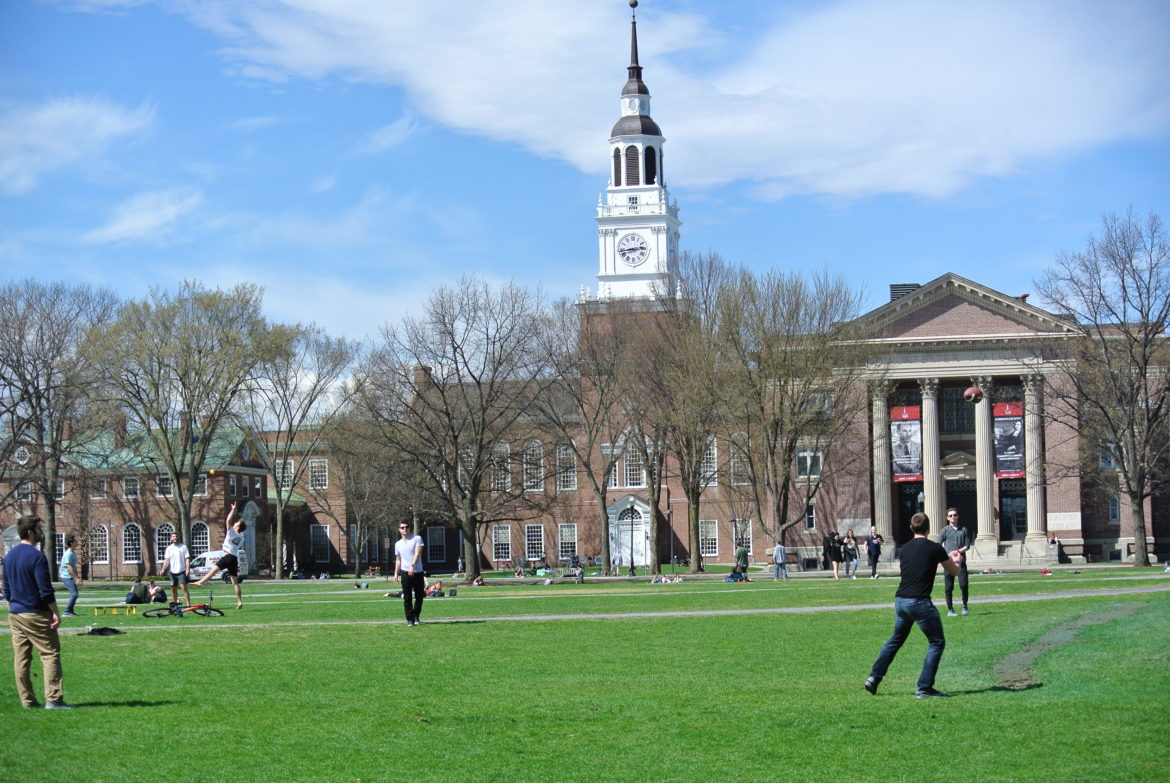
Dartmouth College has lost another round in its effort to avoid acknowledging the new players’ union.
Arnie Alpert (InDepthNH):
The National Labor Relations Board has ordered Dartmouth College to begin collective bargaining with its basketball team, the first undergraduate basketball players in the country to form a union.
....
The latest NLRB ruling ordered the college to begin good faith bargaining and ‘to agree to a bargaining schedule, which requires meeting at least once per month for at least 2 hours per session (or pursuant to another schedule mutually agreed upon by the parties) and requires [Dartmouth] to submit a written summary of each bargaining session to the [NLRB’s] Compliance Officer within five days of each meeting.’
....
https://indepthnh.org/2024/10/01/labor-b...ers-union/
|
|
| 10-01-2024 10:48 PM |
|
jimrtex
All American

Posts: 4,856
Joined: Aug 2021
Reputation: 655
I Root For: Houston, Tulsa, Colorado
Location: |
RE: New Paradigm: Employment & Collective Bargaining
(10-01-2024 10:48 PM)Gitanole Wrote: Dartmouth College has lost another round in its effort to avoid acknowledging the new players’ union.
Arnie Alpert (InDepthNH):
The National Labor Relations Board has ordered Dartmouth College to begin collective bargaining with its basketball team, the first undergraduate basketball players in the country to form a union.
....
The latest NLRB ruling ordered the college to begin good faith bargaining and ‘to agree to a bargaining schedule, which requires meeting at least once per month for at least 2 hours per session (or pursuant to another schedule mutually agreed upon by the parties) and requires [Dartmouth] to submit a written summary of each bargaining session to the [NLRB’s] Compliance Officer within five days of each meeting.’
....
https://indepthnh.org/2024/10/01/labor-b...ers-union/
A corrected version of the story explained that an investigator had recommended that the NLRB Board to order good faith bargaining.
Quote:An investigating attorney for the National Labor Relations Board has recommended that the Board order Dartmouth College to begin collective bargaining with its basketball team, the first undergraduate basketball players in the country to form a union.
According to this article:
https://www.sportico.com/law/analysis/20...234773448/
(1) Regional NLRB body determined Dartmouth basketball players were employees and an appropriate unit for union representation.
(2) Dartmouth appealed (and is appealing) this decision to the national NLRB.
(3) The players are opposing the appeal. The national NLRB board must both approve the review of the regional decision, and then to uphold or overturn it.
(4) An election was held to permit a union to be formed. Dartmouth sought to block the election pending review of the original decision. The national board refused.
(5) The newly certified union sought to open collective bargaining. Dartmouth College refused.
(6) The union filed an unfair labor practice complaint.
(7) An investigator for the NLRB has recommended that the complaint be sustained.
This is the stage we are at.
Dartmouth College wants to get this into the real courts. They will likely argue that the NLRB does not have the authority to define employment for student athletes, based on the recent SCOTUS decision that overturned the doctrine that the judiciary should defer to regulatory bodies interpretation of statutes.
It is not unambiguous whether Dartmouth basketball players are employees.
They may also try to get Congress involved.
|
|
| 10-03-2024 10:32 AM |
|
Gitanole
Barista
Posts: 14,073
Joined: May 2016
Reputation: 2847
I Root For: Florida State
Location: Speared Turf |
RE: New Paradigm: Employment & Collective Bargaining
(10-03-2024 10:32 AM)jimrtex Wrote: (10-01-2024 10:48 PM)Gitanole Wrote: Dartmouth College has lost another round in its effort to avoid acknowledging the new players’ union.
Arnie Alpert (InDepthNH):
The National Labor Relations Board has ordered Dartmouth College to begin collective bargaining with its basketball team, the first undergraduate basketball players in the country to form a union.
....
The latest NLRB ruling ordered the college to begin good faith bargaining and ‘to agree to a bargaining schedule, which requires meeting at least once per month for at least 2 hours per session (or pursuant to another schedule mutually agreed upon by the parties) and requires [Dartmouth] to submit a written summary of each bargaining session to the [NLRB’s] Compliance Officer within five days of each meeting.’
....
https://indepthnh.org/2024/10/01/labor-b...ers-union/
A corrected version of the story explained that an investigator had recommended that the NLRB Board to order good faith bargaining.
Quote:An investigating attorney for the National Labor Relations Board has recommended that the Board order Dartmouth College to begin collective bargaining with its basketball team, the first undergraduate basketball players in the country to form a union.
According to this article:
https://www.sportico.com/law/analysis/20...234773448/
(1) Regional NLRB body determined Dartmouth basketball players were employees and an appropriate unit for union representation.
(2) Dartmouth appealed (and is appealing) this decision to the national NLRB.
(3) The players are opposing the appeal. The national NLRB board must both approve the review of the regional decision, and then to uphold or overturn it.
(4) An election was held to permit a union to be formed. Dartmouth sought to block the election pending review of the original decision. The national board refused.
(5) The newly certified union sought to open collective bargaining. Dartmouth College refused.
(6) The union filed an unfair labor practice complaint.
(7) An investigator for the NLRB has recommended that the complaint be sustained.
This is the stage we are at.
Dartmouth College wants to get this into the real courts. They will likely argue that the NLRB does not have the authority to define employment for student athletes, based on the recent SCOTUS decision that overturned the doctrine that the judiciary should defer to regulatory bodies interpretation of statutes.
It is not unambiguous whether Dartmouth basketball players are employees.
They may also try to get Congress involved.
Much is in flux, yes. fwiw, SCOTUS to date has shown little affection for the traditional NCAA ‘amateurism’ model.
Sportico discussion again, via MSN:
https://www.msn.com/en-us/sports/nba/nlr...r-AA1r7Avw
|
|
| 10-03-2024 03:33 PM |
|
Gitanole
Barista
Posts: 14,073
Joined: May 2016
Reputation: 2847
I Root For: Florida State
Location: Speared Turf |
RE: New Paradigm: Employment & Collective Bargaining
The big off-campus news this week, of course, is Monday’s preliminary settlement in the NCAA antitrust litigation known collectively as House.
Ben Portnoy (SBJ):
https://www.sportsbusinessjournal.com/Ar...settlement
The most significant settlement in college sports history has received another massive boost.
Judge Claudia Wilken granted preliminary approval of a proposed settlement in the House, Hubbard and Carter antitrust cases on Monday afternoon, opening a door for a complete reshaping of the way in which college athletic departments operate.
....
The House settlement is focused on three key pillars: nearly $2.8 billion in back pay to athletes dating to 2016 over lost name, image and likeness revenues to be paid over 10 years ($280 million annually); a revenue-sharing formula that allows schools to pay athletes directly; and eliminating limitations on scholarships in favor of roster limits.
....
The preliminary approval also opens the door for the creation of a third-party body to vet NIL payments greater than $600.
...
A final hearing for the settlement’s approval is scheduled for April 7—coincidentally, the same day as the men’s college basketball national championship game. Athletes will also have until January 31 to opt out or object to the terms of the proposal.
....
Ross Dellenger (Yahoo) examines what the decision settles and what it leaves open. ‘Employee’ status remains to be determined. As revenue sharing is capped (but set to rise as revenues do), an eventual collective bargaining structure is implied.
https://sports.yahoo.com/california-judg...38383.html
(This post was last modified: 10-09-2024 10:38 AM by Gitanole.)
|
|
| 10-09-2024 10:36 AM |
|
Gitanole
Barista
Posts: 14,073
Joined: May 2016
Reputation: 2847
I Root For: Florida State
Location: Speared Turf |
RE: New Paradigm: Employment & Collective Bargaining
April 7 Monday features a crucial court hearing in the ‘House’ case. While judge Claudia Wilken is not expected to rule from the bench, one possible outcome could formalise the understanding of athletes as university employees and launch the creation of collective bargaining structures.
Amanda Christovich (FOS)—always good to follow for NCAA antitrust news—has this report:
https://frontofficesports.com/house-v-nc...mateurism/
(This post was last modified: 04-06-2025 05:50 PM by Gitanole.)
|
|
| 04-06-2025 05:45 PM |
|
jimrtex
All American
Posts: 4,856
Joined: Aug 2021
Reputation: 655
I Root For: Houston, Tulsa, Colorado
Location: |
RE: New Paradigm: Employment & Collective Bargaining
(04-06-2025 05:45 PM)Gitanole Wrote: April 7 Monday features a crucial court hearing in the ‘House’ case. While judge Claudia Wilken is not expected to rule from the bench, one possible outcome could formalise the understanding of athletes as university employees and launch the creation of collective bargaining structures.
Amanda Christovich (FOS)—always good to follow for NCAA antitrust news—has this report:
https://frontofficesports.com/house-v-nc...mateurism/
"It would also allow schools to share a portion of their athletic department revenue (earmarked as NIL earnings from appearing on broadcasts) with all players, beginning at $20.5 million this upcoming year."
This is misleading. The plaintiffs claimed that the NCAA and P5 conference were not paying the athletes form broadcasting their images playing football and basketball games. The conferences and NCAA claimed that Broadcast NIL (BNIL) does not exist, and in the settlement agreement continue to assert that it does not exist. Moreover the settlement agreement forbids the schools and conferences from paying for BNIL.
Most of the settlement damages are in the form of $$$ which the NCAA will pay to the plaintiffs for distribution to players based on a theory that BNIL does exist, in exchange for an agreement that the lawyers will stop suing for BNIL damages.
The settlement does permit schools to pay athletes for non-academic related activities. But the schools don't want to pay directly because that makes the athletes employees.
The settlement does permit schools to pay athletes NIL for brand promotion, and student athletes are being offered contracts which include provisions for activities such as press conferences, coaches shows, use of film clips from games, programs, etc., which are legitimate NIL uses. But the $$$ amounts are more in line what would be earned as performers, rather than the amount that the athletes would earn for using the fame or notoriety they gained from performing to promote the school.
One contract has a provision that says the payment amounts could change, and gave as examples a player winning the Heisman Trophy, or having reduced playing time.
|
|
| 04-07-2025 11:03 AM |
|
Gitanole
Barista
Posts: 14,073
Joined: May 2016
Reputation: 2847
I Root For: Florida State
Location: Speared Turf |
RE: New Paradigm: Employment & Collective Bargaining
Here are a few reports on the April 7 Monday hearing.
Ben Portsmouth (Sports Business Journal):
The House settlement—which centers on the House, Carter and Hubbard antitrust cases—largely focuses on three key pillars:
• Roughly $2.8B in back pay to athletes dating to 2016 over lost NIL revenues name, image and likeness revenues to be paid over 10 years ($280M annually)
• A revenue-sharing formula that allows schools to pay athletes directly
• Eliminating restrictions on scholarship numbers in favor of roster limits.
....
If approved (as expected within days), the settlement would fundamentally shift the way in which college sports operate—and create one of the larger classes in legal history.
....
Collegiate sports leaders are expected on Capitol Hill on Wednesday to broach a narrow antitrust exemption that could allow athletes to collectively bargain without becoming employees (Non-employees cannot collectively bargain under federal law).
....
“There’s no sustainable future for college athletics without collective bargaining,” said Jim Cavale, co-founder of Athletes.org. “You cannot set these rules, you cannot create these structures without the athletes being involved in the process and agreeing to it.”
Michael McCann, Daniel Libit (Sportico):
https://www.sportico.com/law/analysis/20...234846744/
Ross Dellenger (Yahoo):
https://sports.yahoo.com/college-footbal...22716.html
Dan Murphy (ESPN):
https://www.espn.com/college-sports/stor...t-concerns
(This post was last modified: 04-09-2025 03:51 AM by Gitanole.)
|
|
| 04-09-2025 03:42 AM |
|
Gitanole
Barista
Posts: 14,073
Joined: May 2016
Reputation: 2847
I Root For: Florida State
Location: Speared Turf |
RE: New Paradigm: Employment & Collective Bargaining
Here is a good Q&A introduction article on the House case from Associated Press.
Just to update the information after Tuesday’s hearing: Judge Claudia Wilken calls it ‘a good settlement’. She has requested a few adjustments that could be prepared and approved as early as next week. Everything is on course for the settlement to go into effect July 1.
https://apnews.com/article/nil-ncaa-hous...d0bd66f290
(This post was last modified: 04-09-2025 04:57 PM by Gitanole.)
|
|
| 04-09-2025 04:56 PM |
|
Gitanole
Barista
Posts: 14,073
Joined: May 2016
Reputation: 2847
I Root For: Florida State
Location: Speared Turf |
RE: New Paradigm: Employment & Collective Bargaining
As the House settlement reaches its final form, Autonomy 4 conference commissioners are expressing confidence in getting the action they need from Congress to make a new structure sustainable.
Congress will likely enact legislation that enables college players to be compensated and to bargain collectively without the legally-loaded terms ‘employee’ and ‘union’ entering the picture.
https://apnews.com/article/ncaa-congress...7f910df3ed
|
|
| 04-12-2025 04:46 AM |
|
Gitanole
Barista
Posts: 14,073
Joined: May 2016
Reputation: 2847
I Root For: Florida State
Location: Speared Turf |
RE: New Paradigm: Employment & Collective Bargaining
|
|
| 04-15-2025 05:16 AM |
|
Dr Dawgma III
Hark the Sound


Posts: 26,190
Joined: Feb 2007
Reputation: 2779
I Root For: The SoCon
Location: The 19th Hole |
RE: New Paradigm: Employment & Collective Bargaining
Why does it seem they're either students or athletes? I worked for the university when I was an undergrad. Why can't the employment be conditional to being a student? My undergrad job was not open to non-students.
(This post was last modified: 04-15-2025 06:30 AM by Dr Dawgma III.)
|
|
| 04-15-2025 06:29 AM |
|
ken d
Hall of Famer
Posts: 21,344
Joined: Dec 2013
Reputation: 2041
I Root For: college sports
Location: Raleigh |
RE: New Paradigm: Employment & Collective Bargaining
(04-07-2025 11:03 AM)jimrtex Wrote: (04-06-2025 05:45 PM)Gitanole Wrote: April 7 Monday features a crucial court hearing in the ‘House’ case. While judge Claudia Wilken is not expected to rule from the bench, one possible outcome could formalise the understanding of athletes as university employees and launch the creation of collective bargaining structures.
Amanda Christovich (FOS)—always good to follow for NCAA antitrust news—has this report:
https://frontofficesports.com/house-v-nc...mateurism/
"It would also allow schools to share a portion of their athletic department revenue (earmarked as NIL earnings from appearing on broadcasts) with all players, beginning at $20.5 million this upcoming year."
This is misleading. The plaintiffs claimed that the NCAA and P5 conference were not paying the athletes form broadcasting their images playing football and basketball games. The conferences and NCAA claimed that Broadcast NIL (BNIL) does not exist, and in the settlement agreement continue to assert that it does not exist. Moreover the settlement agreement forbids the schools and conferences from paying for BNIL.
Most of the settlement damages are in the form of $$$ which the NCAA will pay to the plaintiffs for distribution to players based on a theory that BNIL does exist, in exchange for an agreement that the lawyers will stop suing for BNIL damages.
The settlement does permit schools to pay athletes for non-academic related activities. But the schools don't want to pay directly because that makes the athletes employees.
The settlement does permit schools to pay athletes NIL for brand promotion, and student athletes are being offered contracts which include provisions for activities such as press conferences, coaches shows, use of film clips from games, programs, etc., which are legitimate NIL uses. But the $$$ amounts are more in line what would be earned as performers, rather than the amount that the athletes would earn for using the fame or notoriety they gained from performing to promote the school.
One contract has a provision that says the payment amounts could change, and gave as examples a player winning the Heisman Trophy, or having reduced playing time.
"But the schools don't want to pay directly because that makes the athletes employees".
Whether or not the school pays the athletes directly has no bearing on whether they meet the criteria for employee status. Companies engage individuals as independent contractors all the time, and pay them directly. That by itself does not make them employees.
A critical issue for the schools when it comes to how courts will view any kind of compensation caps is whether they constitute a restraint of trade that wasn't collectively bargained. My question to our lawyer posters is whether schools or conferences can collectively bargain with independent contractors who are not employees. I can't think of a specific reason why they can't, but IANAL.
(This post was last modified: 04-15-2025 07:48 AM by ken d.)
|
|
| 04-15-2025 07:48 AM |
|
Wahoowa84
Heisman

Posts: 5,448
Joined: Oct 2017
Reputation: 1177
I Root For: UVa
Location: |
RE: New Paradigm: Employment & Collective Bargaining
(04-15-2025 06:29 AM)Dr Dawgma III Wrote: Why does it seem they're either students or athletes? I worked for the university when I was an undergrad. Why can't the employment be conditional to being a student? My undergrad job was not open to non-students.
My understanding…it’s not about concerns with “employment” as conditional on being a student-athlete.
Universities’ ptb fundamentally dislike the likely downstream consequences of student-athletes as “employees”. Employee/employer relationships have rights and obligations that would likely add to the complexity (and cost) of today’s collegiate athletics eco-system. Private universities seem to be the most averse to creating a this new class of “employees”.
|
|
| 04-15-2025 10:49 AM |
|
Gitanole
Barista
Posts: 14,073
Joined: May 2016
Reputation: 2847
I Root For: Florida State
Location: Speared Turf |
RE: New Paradigm: Employment & Collective Bargaining
(04-15-2025 10:49 AM)Wahoowa84 Wrote: My understanding…it’s not about concerns with “employment” as conditional on being a student-athlete.
Universities’ ptb fundamentally dislike the likely downstream consequences of student-athletes as “employees”. Employee/employer relationships have rights and obligations that would likely add to the complexity (and cost) of today’s collegiate athletics eco-system. Private universities seem to be the most averse to creating a this new class of “employees”.
Yes indeed. Under the law the term ‘employee’ launches a series of rights and obligations, as you say. A great deal of precedent exists here in case law.
Among those rights and obligations are the right of employees to unionise and the obligation of employers to recognise unions. The term ‘union’ is itself loaded with plenty of downstream consequences.
This is why we are seeing lobbying on Capitol Hill by conference commissioners. The hope is to establish statutes that specifically enable athletes to be paid without triggering the ‘employee’ word, and to enable those athletes to bargain collectively on caps and portal limits without triggering the ‘union’ word.
This gives both plaintiffs and defendants in House the ability to form their own structures to meet the requirements of the settlement.
(This post was last modified: 04-16-2025 01:21 AM by Gitanole.)
|
|
| 04-15-2025 11:11 AM |
|
ken d
Hall of Famer
Posts: 21,344
Joined: Dec 2013
Reputation: 2041
I Root For: college sports
Location: Raleigh |
RE: New Paradigm: Employment & Collective Bargaining
(04-15-2025 11:11 AM)Gitanole Wrote: (04-15-2025 10:49 AM)Wahoowa84 Wrote: My understanding…it’s not about concerns with “employment” as conditional on being a student-athlete.
Universities’ ptb fundamentally dislike the likely downstream consequences of student-athletes as “employees”. Employee/employer relationships have rights and obligations that would likely add to the complexity (and cost) of today’s collegiate athletics eco-system. Private universities seem to be the most averse to creating a this new class of “employees”.
Yes indeed. Under the law the term ‘employee’ launches a series of rights and obligations, as you say. A great deal of precedent exists here in case law.
Among those rights and obligations are the right of employees to unionise and the obligation of employers to recognise unions. The term ‘union’ is itself loaded with plenty of downstream consequences.
This is why we are seeing lobbying on Capitol Hill by conference commissioners. The hope is to establish statutes that specifically enable athletes to be paid without triggering the ‘employee’ word, and to enable those athletes to bargain collectively on caps and portal limits without triggering the ‘union’ word. This gives both plaintiffs and defendants in House the ability to firm their own structures to meet the requirements of the settlement.
I would assume the athletes would be part of a Players Association like the NFLPA. I don't know that it matters whether that's terchnically a "union" or not, but I doubt the courts would allow schools to prohibit athletes from striking. If the schools are the bargaining unit, rather than conferences or some group of conferences, the leverage players may have could be much different.
|
|
| 04-15-2025 03:44 PM |
|
Gitanole
Barista
Posts: 14,073
Joined: May 2016
Reputation: 2847
I Root For: Florida State
Location: Speared Turf |
RE: New Paradigm: Employment & Collective Bargaining
(04-15-2025 03:44 PM)ken d Wrote: (04-15-2025 11:11 AM)Gitanole Wrote: (04-15-2025 10:49 AM)Wahoowa84 Wrote: My understanding…it’s not about concerns with “employment” as conditional on being a student-athlete.
Universities’ ptb fundamentally dislike the likely downstream consequences of student-athletes as “employees”. Employee/employer relationships have rights and obligations that would likely add to the complexity (and cost) of today’s collegiate athletics eco-system. Private universities seem to be the most averse to creating a this new class of “employees”.
Yes indeed. Under the law the term ‘employee’ launches a series of rights and obligations, as you say. A great deal of precedent exists here in case law.
Among those rights and obligations are the right of employees to unionise and the obligation of employers to recognise unions. The term ‘union’ is itself loaded with plenty of downstream consequences.
This is why we are seeing lobbying on Capitol Hill by conference commissioners. The hope is to establish statutes that specifically enable athletes to be paid without triggering the ‘employee’ word, and to enable those athletes to bargain collectively on caps and portal limits without triggering the ‘union’ word. This gives both plaintiffs and defendants in House the ability to firm their own structures to meet the requirements of the settlement.
I would assume the athletes would be part of a Players Association like the NFLPA. I don't know that it matters whether that's terchnically a "union" or not, but I doubt the courts would allow schools to prohibit athletes from striking. If the schools are the bargaining unit, rather than conferences or some group of conferences, the leverage players may have could be much different.
NFL players are employees and the NFLPA is a union.
To bring a similar arrangement inside a tent that involves universities and students and enrollments and scholarships, you either go the same route—yes, these are employees who bargain through a union—or you get new law passed that will create new categories more suited to a student situation.
But yes, something analogous to the NFL structure could be crafted for ‘pro-prep’ universities. And it’s a good idea for many reasons. Adapting the model to an academic mission can happen. By all accounts, both university athletes and university leaders want something like this.
(This post was last modified: 04-16-2025 01:53 AM by Gitanole.)
|
|
| 04-16-2025 01:28 AM |
|
Dr Dawgma III
Hark the Sound
Posts: 26,190
Joined: Feb 2007
Reputation: 2779
I Root For: The SoCon
Location: The 19th Hole |
RE: New Paradigm: Employment & Collective Bargaining
(04-15-2025 11:11 AM)Gitanole Wrote: (04-15-2025 10:49 AM)Wahoowa84 Wrote: My understanding…it’s not about concerns with “employment” as conditional on being a student-athlete.
Universities’ ptb fundamentally dislike the likely downstream consequences of student-athletes as “employees”. Employee/employer relationships have rights and obligations that would likely add to the complexity (and cost) of today’s collegiate athletics eco-system. Private universities seem to be the most averse to creating a this new class of “employees”.
Yes indeed. Under the law the term ‘employee’ launches a series of rights and obligations, as you say. A great deal of precedent exists here in case law.
Among those rights and obligations are the right of employees to unionise and the obligation of employers to recognise unions. The term ‘union’ is itself loaded with plenty of downstream consequences.
This is why we are seeing lobbying on Capitol Hill by conference commissioners. The hope is to establish statutes that specifically enable athletes to be paid without triggering the ‘employee’ word, and to enable those athletes to bargain collectively on caps and portal limits without triggering the ‘union’ word.
This gives both plaintiffs and defendants in House the ability to form their own structures to meet the requirements of the settlement.
Wow if only my fellow student workers and I knew this we could have formed a union and made more than seven bucks an hour
|
|
| 04-16-2025 07:03 AM |
|
ken d
Hall of Famer
Posts: 21,344
Joined: Dec 2013
Reputation: 2041
I Root For: college sports
Location: Raleigh |
RE: New Paradigm: Employment & Collective Bargaining
(04-16-2025 01:28 AM)Gitanole Wrote: (04-15-2025 03:44 PM)ken d Wrote: (04-15-2025 11:11 AM)Gitanole Wrote: (04-15-2025 10:49 AM)Wahoowa84 Wrote: My understanding…it’s not about concerns with “employment” as conditional on being a student-athlete.
Universities’ ptb fundamentally dislike the likely downstream consequences of student-athletes as “employees”. Employee/employer relationships have rights and obligations that would likely add to the complexity (and cost) of today’s collegiate athletics eco-system. Private universities seem to be the most averse to creating a this new class of “employees”.
Yes indeed. Under the law the term ‘employee’ launches a series of rights and obligations, as you say. A great deal of precedent exists here in case law.
Among those rights and obligations are the right of employees to unionise and the obligation of employers to recognise unions. The term ‘union’ is itself loaded with plenty of downstream consequences.
This is why we are seeing lobbying on Capitol Hill by conference commissioners. The hope is to establish statutes that specifically enable athletes to be paid without triggering the ‘employee’ word, and to enable those athletes to bargain collectively on caps and portal limits without triggering the ‘union’ word. This gives both plaintiffs and defendants in House the ability to firm their own structures to meet the requirements of the settlement.
I would assume the athletes would be part of a Players Association like the NFLPA. I don't know that it matters whether that's terchnically a "union" or not, but I doubt the courts would allow schools to prohibit athletes from striking. If the schools are the bargaining unit, rather than conferences or some group of conferences, the leverage players may have could be much different.
NFL players are employees and the NFLPA is a union.
To bring a similar arrangement inside a tent that involves universities and students and enrollments and scholarships, you either go the same route—yes, these are employees who bargain through a union—or you get new law passed that will create new categories more suited to a student situation.
But yes, something analogous to the NFL structure could be crafted for ‘pro-prep’ universities. And it’s a good idea for many reasons. Adapting the model to an academic mission can happen. By all accounts, both university athletes and university leaders want something like this.
NFL players are employees, and the NFLPA is the bargaining unit that represents their interests. But unlike a union factory worker, for example, every NFL player has an individual employment contract that must fit under the umbrella of collectively bargained rules that include an overall (not individual) salary cap.
There is no reason why college athletes could not have individual contracts, with provisions that include a requirement that they maintain academic good standing, and with a term during which their ability to transfer might have limitations bargained by some entity on the other side of the table. It's not clear who that entity may be. Options include each individual school, each conference, or even some larger subset of the NCAA (like D-I, FBS, P4, or some as yet to be created body).
Without that collectively bargained contract, schools and conferences will always be walking through an anti-trust minefield, and the current chaos will continue.
|
|
| 04-16-2025 07:14 AM |
|
Gitanole
Barista
Posts: 14,073
Joined: May 2016
Reputation: 2847
I Root For: Florida State
Location: Speared Turf |
RE: New Paradigm: Employment & Collective Bargaining
(04-16-2025 07:14 AM)ken d Wrote: (04-16-2025 01:28 AM)Gitanole Wrote: (04-15-2025 03:44 PM)ken d Wrote: (04-15-2025 11:11 AM)Gitanole Wrote: (04-15-2025 10:49 AM)Wahoowa84 Wrote: My understanding…it’s not about concerns with “employment” as conditional on being a student-athlete.
Universities’ ptb fundamentally dislike the likely downstream consequences of student-athletes as “employees”. Employee/employer relationships have rights and obligations that would likely add to the complexity (and cost) of today’s collegiate athletics eco-system. Private universities seem to be the most averse to creating a this new class of “employees”.
Yes indeed. Under the law the term ‘employee’ launches a series of rights and obligations, as you say. A great deal of precedent exists here in case law.
Among those rights and obligations are the right of employees to unionise and the obligation of employers to recognise unions. The term ‘union’ is itself loaded with plenty of downstream consequences.
This is why we are seeing lobbying on Capitol Hill by conference commissioners. The hope is to establish statutes that specifically enable athletes to be paid without triggering the ‘employee’ word, and to enable those athletes to bargain collectively on caps and portal limits without triggering the ‘union’ word. This gives both plaintiffs and defendants in House the ability to firm their own structures to meet the requirements of the settlement.
I would assume the athletes would be part of a Players Association like the NFLPA. I don't know that it matters whether that's terchnically a "union" or not, but I doubt the courts would allow schools to prohibit athletes from striking. If the schools are the bargaining unit, rather than conferences or some group of conferences, the leverage players may have could be much different.
NFL players are employees and the NFLPA is a union.
To bring a similar arrangement inside a tent that involves universities and students and enrollments and scholarships, you either go the same route—yes, these are employees who bargain through a union—or you get new law passed that will create new categories more suited to a student situation.
But yes, something analogous to the NFL structure could be crafted for ‘pro-prep’ universities. And it’s a good idea for many reasons. Adapting the model to an academic mission can happen. By all accounts, both university athletes and university leaders want something like this.
NFL players are employees, and the NFLPA is the bargaining unit that represents their interests. But unlike a union factory worker, for example, every NFL player has an individual employment contract that must fit under the umbrella of collectively bargained rules that include an overall (not individual) salary cap.
There is no reason why college athletes could not have individual contracts, with provisions that include a requirement that they maintain academic good standing, and with a term during which their ability to transfer might have limitations bargained by some entity on the other side of the table. It's not clear who that entity may be. Options include each individual school, each conference, or even some larger subset of the NCAA (like D-I, FBS, P4, or some as yet to be created body).
Without that collectively bargained contract, schools and conferences will always be walking through an anti-trust minefield, and the current chaos will continue.
Sure. For competitive reasons, national entities will likely need to stand behind the bargaining on each side of the table—whatever the arrangements might be for ‘local’ structures within that. The NFL model seems an instructive one to adapt.
Not sure the NCAA is in this picture, though... It will be interesting to see.
|
|
| 04-17-2025 08:12 AM |
|
jimrtex
All American
Posts: 4,856
Joined: Aug 2021
Reputation: 655
I Root For: Houston, Tulsa, Colorado
Location: |
RE: New Paradigm: Employment & Collective Bargaining
(04-15-2025 07:48 AM)ken d Wrote: (04-07-2025 11:03 AM)jimrtex Wrote: (04-06-2025 05:45 PM)Gitanole Wrote: April 7 Monday features a crucial court hearing in the ‘House’ case. While judge Claudia Wilken is not expected to rule from the bench, one possible outcome could formalise the understanding of athletes as university employees and launch the creation of collective bargaining structures.
Amanda Christovich (FOS)—always good to follow for NCAA antitrust news—has this report:
https://frontofficesports.com/house-v-nc...mateurism/
"It would also allow schools to share a portion of their athletic department revenue (earmarked as NIL earnings from appearing on broadcasts) with all players, beginning at $20.5 million this upcoming year."
This is misleading. The plaintiffs claimed that the NCAA and P5 conference were not paying the athletes form broadcasting their images playing football and basketball games. The conferences and NCAA claimed that Broadcast NIL (BNIL) does not exist, and in the settlement agreement continue to assert that it does not exist. Moreover the settlement agreement forbids the schools and conferences from paying for BNIL.
Most of the settlement damages are in the form of $$$ which the NCAA will pay to the plaintiffs for distribution to players based on a theory that BNIL does exist, in exchange for an agreement that the lawyers will stop suing for BNIL damages.
The settlement does permit schools to pay athletes for non-academic related activities. But the schools don't want to pay directly because that makes the athletes employees.
The settlement does permit schools to pay athletes NIL for brand promotion, and student athletes are being offered contracts which include provisions for activities such as press conferences, coaches shows, use of film clips from games, programs, etc., which are legitimate NIL uses. But the $$$ amounts are more in line what would be earned as performers, rather than the amount that the athletes would earn for using the fame or notoriety they gained from performing to promote the school.
One contract has a provision that says the payment amounts could change, and gave as examples a player winning the Heisman Trophy, or having reduced playing time.
"But the schools don't want to pay directly because that makes the athletes employees".
Whether or not the school pays the athletes directly has no bearing on whether they meet the criteria for employee status. Companies engage individuals as independent contractors all the time, and pay them directly. That by itself does not make them employees.
A critical issue for the schools when it comes to how courts will view any kind of compensation caps is whether they constitute a restraint of trade that wasn't collectively bargained. My question to our lawyer posters is whether schools or conferences can collectively bargain with independent contractors who are not employees. I can't think of a specific reason why they can't, but IANAL.
If a university is controlling their activity to the extent that they do, they are employees.
The settlement expands 3rd Party NIL opportunities. The school may facilitate contact with athletes. The school may also engage in coordinated NIL deals, such as shoe contracts, video game contracts, merchandising contracts (a jersey with school colors and logos with the name and number of a player is using the NIL of both the school and the athlete). But these are 3rd party NIL because an outside party is paying.
The settlement permits 2nd Party NIL for "brand promotion". If a school puts a player's name, picture, and stats in a game program they are using their NIL. Currently, student-athletes are expected to waive these NIL rights. Dartmouth athletes could choose not to waive these rights, but they could not be named player of the week by Dartmouth or the Ivy League, and probably would be excluded from game programs. The 1983 NC State players had waived their NIL rights and don't get paid royalties for video clips of that game.
But the schools are attempting to make their compensation of student-athletes through brand promotion. They may include requirements for making personal appearances on coaches shows or the like. But it is ludicrous to say that a player is being paid $100s of thousands to promote the school.
|
|
| 04-17-2025 09:08 AM |
|

 /
New Paradigm: Employment & Collective Bargaining


