
+- CSNbbs (https://csnbbs.com)
+-- Forum: Active Boards (/forum-769.html)
+--- Forum: Lounge (/forum-564.html)
+---- Forum: The Spin Room (/forum-540.html)
+---- Thread: AT&T - Quite the Dichotomy (/thread-838436.html)
RE: AT&T - Quite the Dichotomy - Bull_Is_Back - 12-27-2017 04:56 PM
(12-27-2017 03:59 PM)Marc Mensa Wrote:(12-27-2017 02:17 PM)UofMstateU Wrote:(12-27-2017 01:32 PM)Marc Mensa Wrote:(12-27-2017 12:11 PM)UofMstateU Wrote:(12-27-2017 12:05 PM)DavidSt Wrote: It shows what a bunch of bunk of horse manure the Republicans force on us. The last few times that the corporate get the tax cuts and tax holidays? They give the CEOs and execs a huge pay raises and buy out the stocks on their companies to inflate their prices. At the same time, they fired or laid off 100,000 of employees. The American people are not idiots, and they see the tax cuts is a reward for these big business to lay more people off, and outsource their businesses to other countries.
Tell me, when was the last time the corporate tax rate was cut?
What percent of GDP were corporate income tax revenues in 1967?
What percent of GDP were corporate income tax revenues in 2016?
What percent of GDP were payroll tax revenues in 1967?
What percent of GDP were payroll tax revenues in 2016?
Truth hurts, doesnt it?
Can you answer these very simple questions?
This, in a nutshell, is my problem with the left. They are so focused on envy of others they never even ask the right questions.
Instead of "what percent of the gdp" was this or that you should be focusing on individuals.
What were the individual rates in 1960? what are they now?
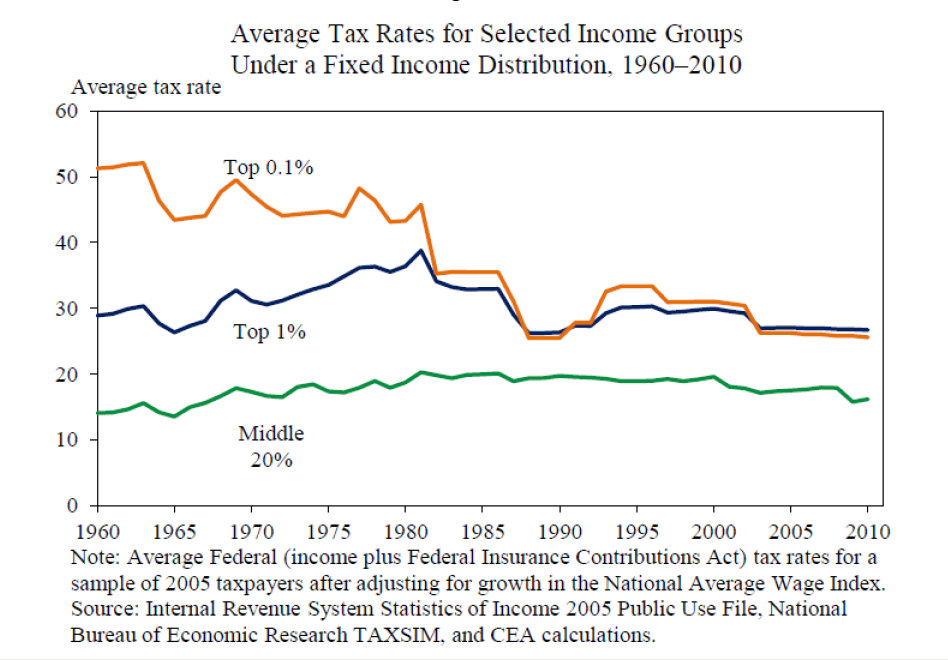
So why the debt?

RE: AT&T - Quite the Dichotomy - pkptigers07 - 12-27-2017 10:22 PM
Some good reading on the transformation underway at AT&T:
http://fortune.com/att-hr-retrain-employees-jobs-best-companies/
RE: AT&T - Quite the Dichotomy - stinkfist - 12-27-2017 10:36 PM
(12-27-2017 04:56 PM)Bull_Is_Back Wrote:(12-27-2017 03:59 PM)Marc Mensa Wrote:(12-27-2017 02:17 PM)UofMstateU Wrote:(12-27-2017 01:32 PM)Marc Mensa Wrote:(12-27-2017 12:11 PM)UofMstateU Wrote: Tell me, when was the last time the corporate tax rate was cut?
What percent of GDP were corporate income tax revenues in 1967?
What percent of GDP were corporate income tax revenues in 2016?
What percent of GDP were payroll tax revenues in 1967?
What percent of GDP were payroll tax revenues in 2016?
Truth hurts, doesnt it?
Can you answer these very simple questions?
This, in a nutshell, is my problem with the left. They are so focused on envy of others they never even ask the right questions.
Instead of "what percent of the gdp" was this or that you should be focusing on individuals.
What were the individual rates in 1960? what are they now?
So why the debt?
increased spending yields a flat line in their world.....
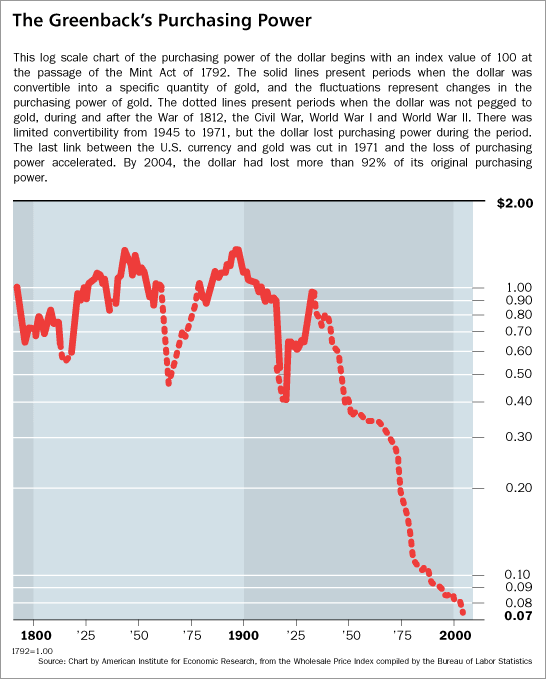
however, purchasing power has declined in real and relative terms over the USD's existence.....it's the one I can't get past relative to capitalism as best method relative to status quo econ principles......
this shite started once it began.....the key is keeping the USD solvent......shite like bitcoin and other digital commerce is going to be something I want no part of moving forward....and it's coming......
do not underestimate the chinese/japanese and their ability to manipulate.....nor the power of the federal reserve/legislature to hide from what is currently valid.....
this is the battle that nobody wants to discuss.......and why is that.....
well, it's b/c they understand the if/then consequences......
RE: AT&T - Quite the Dichotomy - bubbapt - 12-28-2017 04:32 AM
(12-27-2017 12:08 PM)Bull_Is_Back Wrote:(12-27-2017 12:05 PM)DavidSt Wrote: It shows what a bunch of bunk of horse manure the Republicans force on us. The last few times that the corporate get the tax cuts and tax holidays? They give the CEOs and execs a huge pay raises and buy out the stocks on their companies to inflate their prices. At the same time, they fired or laid off 100,000 of employees.
Unemployment is down and workforce participation is up and the actual underemployment rate is better than it's been since before the 2007 recession. Tell me again how that's horse manure.
Quote:The American people are not idiots, and they see the tax cuts is a reward for these big business to lay more people off, and outsource their businesses to other countries.
As the employment picture get's better and people start taking home more of their pay check you're going to see them wake up with regards as to the horse crap being sold to them by the left.
Plus, AT&T was paying out 92% of its earnings as dividends. This will allow them the ability to raise the dividend and still have more money left over for research and capital outlays.
Good for granny holding the AT&T stock, and good for 401ks.
RE: AT&T - Quite the Dichotomy - CardFan1 - 12-28-2017 08:14 AM
ATT has thousands of different divisions so not unusual to hire more in 1 division and layoff in others. My old company did it all over the world. Selling off or buying divisions. Now They are hurting after selling off Legacy products and a dip for a former CEO.
RE: AT&T - Quite the Dichotomy - Marc Mensa - 12-28-2017 09:50 AM
(12-27-2017 04:56 PM)Bull_Is_Back Wrote:(12-27-2017 03:59 PM)Marc Mensa Wrote:(12-27-2017 02:17 PM)UofMstateU Wrote:(12-27-2017 01:32 PM)Marc Mensa Wrote:(12-27-2017 12:11 PM)UofMstateU Wrote: Tell me, when was the last time the corporate tax rate was cut?
What percent of GDP were corporate income tax revenues in 1967?
What percent of GDP were corporate income tax revenues in 2016?
What percent of GDP were payroll tax revenues in 1967?
What percent of GDP were payroll tax revenues in 2016?
Truth hurts, doesnt it?
Can you answer these very simple questions?
This, in a nutshell, is my problem with the left. They are so focused on envy of others they never even ask the right questions.
Instead of "what percent of the gdp" was this or that you should be focusing on individuals.
What were the individual rates in 1960? what are they now?
I ask about "percentage of the payroll tax verses percentage of corporate income tax" because it shows a clear shift in responsibility. Payroll taxes are largely taxes on the middle... if you get a pay check you get hit with the payroll tax. If we need to put more money in the hands of spenders then cut the payroll tax rate and extend the tax on wages above 118k. Payroll taxes accounted for twice as large a chunk of GDP in 2016 than they did in 1967. Corporate income taxes, on the other hand, accounted for half as much of GDP in 2016 as they did in 1967.
RE: AT&T - Quite the Dichotomy - Bull_Is_Back - 12-28-2017 10:04 AM
(12-28-2017 09:50 AM)Marc Mensa Wrote: I ask about "percentage of the payroll tax verses percentage of corporate income tax" because it shows a clear shift in responsibility.
And I pointed out that people tax rates are just about the same because it shows that the change in total pay is not purposeful but coincidence.
Quote:If we need to put more money in the hands of spenders then cut the payroll tax rate and extend the tax on wages above 118k.
As much as that would please me, given I would benefit a bit, that "extra money" would get extracted from corporations and thus be lost to increased product and service costs.
Quote:Payroll taxes accounted for twice as large a chunk of GDP in 2016 than they did in 1967.
But an individuals payroll tax was nearly the same. You come at this from identity / group politics, and I do not.
I just got a tax cut, should I care that my employer got a bigger one?
RE: AT&T - Quite the Dichotomy - Owl 69/70/75 - 12-28-2017 10:37 AM
(12-27-2017 01:32 PM)Marc Mensa Wrote:(12-27-2017 12:11 PM)UofMstateU Wrote:What percent of GDP were corporate income tax revenues in 1967?(12-27-2017 12:05 PM)DavidSt Wrote: It shows what a bunch of bunk of horse manure the Republicans force on us. The last few times that the corporate get the tax cuts and tax holidays? They give the CEOs and execs a huge pay raises and buy out the stocks on their companies to inflate their prices. At the same time, they fired or laid off 100,000 of employees. The American people are not idiots, and they see the tax cuts is a reward for these big business to lay more people off, and outsource their businesses to other countries.Tell me, when was the last time the corporate tax rate was cut?
What percent of GDP were corporate income tax revenues in 2016?
What percent of GDP were payroll tax revenues in 1967?
What percent of GDP were payroll tax revenues in 2016?
Let's see, rounding to nearest tenth of a percent, I calculate you answers to be, respectively:
4.2%
1.7%
4.0%
6.2%
Looks like a trend. But you are cherry-picking to omit misleadingly some significant dat points. For example, for 1977, the numbers are corporate 2.6% and payroll 5.1%. So the bulk of the trend occurred in the first decade of the 40-year period you cited, all before Reagan, for example.
Also, you need to compare not just years, but also other countries. How did our numbers compare to those for, say, other OECD members (developed countries) during those years? After all, I can move my factory from Pittsburgh to Poland, but I can't move it from Pittsburgh to 1967. So taxes as a percent of GDP is a dependent variable, including tax rates, income definition, and decisions where to locate taxable activities, among other factors. I think you will find that in most of them, income taxes are a lower percent of GDP and payroll taxes are a higher percent of GDP, than here. Those relationships clearly exist when comparing those revenues to total government revenues instead of GDP. And the point of this is how much of the decline in corporate tax revenues is attributable to companies' moving operations overseas in those 40 years?
You need to look more closely at the drivers, rather than simply cherry-0picking data points.
RE: AT&T - Quite the Dichotomy - stinkfist - 12-28-2017 10:43 AM
thank you bull and owl for doing the due......I'm not that guy.....
RE: AT&T - Quite the Dichotomy - UofMstateU - 12-28-2017 10:56 AM
(12-28-2017 10:37 AM)Owl 69/70/75 Wrote:(12-27-2017 01:32 PM)Marc Mensa Wrote:(12-27-2017 12:11 PM)UofMstateU Wrote:What percent of GDP were corporate income tax revenues in 1967?(12-27-2017 12:05 PM)DavidSt Wrote: It shows what a bunch of bunk of horse manure the Republicans force on us. The last few times that the corporate get the tax cuts and tax holidays? They give the CEOs and execs a huge pay raises and buy out the stocks on their companies to inflate their prices. At the same time, they fired or laid off 100,000 of employees. The American people are not idiots, and they see the tax cuts is a reward for these big business to lay more people off, and outsource their businesses to other countries.Tell me, when was the last time the corporate tax rate was cut?
What percent of GDP were corporate income tax revenues in 2016?
What percent of GDP were payroll tax revenues in 1967?
What percent of GDP were payroll tax revenues in 2016?
Let's see, rounding to nearest tenth of a percent, I calculate you answers to be, respectively:
4.2%
1.7%
4.0%
6.2%
Looks like a trend. But you are cherry-picking to omit misleadingly some significant dat points. For example, for 1977, the numbers are corporate 2.6% and payroll 5.1%. So the bulk of the trend occurred in the first decade of the 40-year period you cited, all before Reagan, for example.
Also, you need to compare not just years, but also other countries. How did our numbers compare to those for, say, other OECD members (developed countries) during those years? After all, I can move my factory from Pittsburgh to Poland, but I can't move it from Pittsburgh to 1967. So taxes as a percent of GDP is a dependent variable, including tax rates, income definition, and decisions where to locate taxable activities, among other factors. I think you will find that in most of them, income taxes are a lower percent of GDP and payroll taxes are a higher percent of GDP, than here. Those relationships clearly exist when comparing those revenues to total government revenues instead of GDP. And the point of this is how much of the decline in corporate tax revenues is attributable to companies' moving operations overseas in those 40 years?
You need to look more closely at the drivers, rather than simply cherry-0picking data points.
So, if I understand this correctly (and since Mensa refuses to answer my question):
It appears that the corporate tax as a part of the GDP is down, likely due to the fact that corporations can take the business to a different taxing jurisdiction, whereas the poor american worker can not.
This would be similar to cities that tax at high rate, and see their tax base flee for the suburbs and rural areas to avoid the steep taxes. Only this scenario for corporations occur at a global level versus a city/state level for the american worker.
Still waiting for Mensa to man up, though.
RE: AT&T - Quite the Dichotomy - Marc Mensa - 12-28-2017 11:03 AM
Not cherry picking data points at all. The CBO data report goes back 50 years...hence 1967.
The point being... corporate income taxes are a smaller piece of the pie than they once were and payroll taxes are a larger slice... and that divide is about to get even larger.
There are reasons middle class earners are losing.
RE: AT&T - Quite the Dichotomy - stinkfist - 12-28-2017 11:10 AM
(12-28-2017 11:03 AM)Marc Mensa Wrote: Not cherry picking data points at all. The CBO data report goes back 50 years...hence 1967.
The point being... corporate income taxes are a smaller piece of the pie than they once were and payroll taxes are a larger slice... and that divide is about to get even larger.
There are reasons middle class earners are losing.
in theory, creating more jobs due to this is a bad thing???
srsly???
how about this working in tandem with a reduction in government spending on fruitless entitlements???
uh-oh.....that may actually have a chance.....
RE: AT&T - Quite the Dichotomy - Crebman - 12-28-2017 11:23 AM
(12-28-2017 11:03 AM)Marc Mensa Wrote: Not cherry picking data points at all. The CBO data report goes back 50 years...hence 1967.
The point being... corporate income taxes are a smaller piece of the pie than they once were and payroll taxes are a larger slice... and that divide is about to get even larger.
There are reasons middle class earners are losing.
Yeah, you cherry picked data. And, picked data from before the economy was a lot less global like today. You can no longer ignore how the rest of the world taxes.
RE: AT&T - Quite the Dichotomy - UofMstateU - 12-28-2017 11:42 AM
(12-28-2017 10:56 AM)UofMstateU Wrote:(12-28-2017 10:37 AM)Owl 69/70/75 Wrote:(12-27-2017 01:32 PM)Marc Mensa Wrote:(12-27-2017 12:11 PM)UofMstateU Wrote:What percent of GDP were corporate income tax revenues in 1967?(12-27-2017 12:05 PM)DavidSt Wrote: It shows what a bunch of bunk of horse manure the Republicans force on us. The last few times that the corporate get the tax cuts and tax holidays? They give the CEOs and execs a huge pay raises and buy out the stocks on their companies to inflate their prices. At the same time, they fired or laid off 100,000 of employees. The American people are not idiots, and they see the tax cuts is a reward for these big business to lay more people off, and outsource their businesses to other countries.Tell me, when was the last time the corporate tax rate was cut?
What percent of GDP were corporate income tax revenues in 2016?
What percent of GDP were payroll tax revenues in 1967?
What percent of GDP were payroll tax revenues in 2016?
Let's see, rounding to nearest tenth of a percent, I calculate you answers to be, respectively:
4.2%
1.7%
4.0%
6.2%
Looks like a trend. But you are cherry-picking to omit misleadingly some significant dat points. For example, for 1977, the numbers are corporate 2.6% and payroll 5.1%. So the bulk of the trend occurred in the first decade of the 40-year period you cited, all before Reagan, for example.
Also, you need to compare not just years, but also other countries. How did our numbers compare to those for, say, other OECD members (developed countries) during those years? After all, I can move my factory from Pittsburgh to Poland, but I can't move it from Pittsburgh to 1967. So taxes as a percent of GDP is a dependent variable, including tax rates, income definition, and decisions where to locate taxable activities, among other factors. I think you will find that in most of them, income taxes are a lower percent of GDP and payroll taxes are a higher percent of GDP, than here. Those relationships clearly exist when comparing those revenues to total government revenues instead of GDP. And the point of this is how much of the decline in corporate tax revenues is attributable to companies' moving operations overseas in those 40 years?
You need to look more closely at the drivers, rather than simply cherry-0picking data points.
So, if I understand this correctly (and since Mensa refuses to answer my question):
It appears that the corporate tax as a part of the GDP is down, likely due to the fact that corporations can take the business to a different taxing jurisdiction, whereas the poor american worker can not.
This would be similar to cities that tax at high rate, and see their tax base flee for the suburbs and rural areas to avoid the steep taxes. Only this scenario for corporations occur at a global level versus a city/state level for the american worker.
Still waiting for Mensa to man up, though.
bump
RE: AT&T - Quite the Dichotomy - Owl 69/70/75 - 12-28-2017 12:05 PM
(12-28-2017 11:03 AM)Marc Mensa Wrote: Not cherry picking data points at all. The CBO data report goes back 50 years...hence 1967.
The point being... corporate income taxes are a smaller piece of the pie than they once were and payroll taxes are a larger slice... and that divide is about to get even larger.
There are reasons middle class earners are losing.
By excluding, for example, 1977, yes, you cherry picked data. Before you start blaming everything on the Reagan and subsequent tax cuts, you need to explain what happened between 1967 and 1977.
And it's no secret why this trend is happening. High US corporate tax rates are driving corporations to move profitable operations overseas. That means lower corporate tax revenues here and lower middle class wages here.
And as I noted, the trends you cite are more pronounced in Europe, where, interestingly enough, wealth and income dispersion are less unequal. How do you explain that?
RE: AT&T - Quite the Dichotomy - stinkfist - 12-28-2017 12:09 PM
(12-28-2017 11:42 AM)UofMstateU Wrote:(12-28-2017 10:56 AM)UofMstateU Wrote:(12-28-2017 10:37 AM)Owl 69/70/75 Wrote:(12-27-2017 01:32 PM)Marc Mensa Wrote:(12-27-2017 12:11 PM)UofMstateU Wrote: Tell me, when was the last time the corporate tax rate was cut?What percent of GDP were corporate income tax revenues in 1967?
What percent of GDP were corporate income tax revenues in 2016?
What percent of GDP were payroll tax revenues in 1967?
What percent of GDP were payroll tax revenues in 2016?
Let's see, rounding to nearest tenth of a percent, I calculate you answers to be, respectively:
4.2%
1.7%
4.0%
6.2%
Looks like a trend. But you are cherry-picking to omit misleadingly some significant dat points. For example, for 1977, the numbers are corporate 2.6% and payroll 5.1%. So the bulk of the trend occurred in the first decade of the 40-year period you cited, all before Reagan, for example.
Also, you need to compare not just years, but also other countries. How did our numbers compare to those for, say, other OECD members (developed countries) during those years? After all, I can move my factory from Pittsburgh to Poland, but I can't move it from Pittsburgh to 1967. So taxes as a percent of GDP is a dependent variable, including tax rates, income definition, and decisions where to locate taxable activities, among other factors. I think you will find that in most of them, income taxes are a lower percent of GDP and payroll taxes are a higher percent of GDP, than here. Those relationships clearly exist when comparing those revenues to total government revenues instead of GDP. And the point of this is how much of the decline in corporate tax revenues is attributable to companies' moving operations overseas in those 40 years?
You need to look more closely at the drivers, rather than simply cherry-0picking data points.
So, if I understand this correctly (and since Mensa refuses to answer my question):
It appears that the corporate tax as a part of the GDP is down, likely due to the fact that corporations can take the business to a different taxing jurisdiction, whereas the poor american worker can not.
This would be similar to cities that tax at high rate, and see their tax base flee for the suburbs and rural areas to avoid the steep taxes. Only this scenario for corporations occur at a global level versus a city/state level for the american worker.
Still waiting for Mensa to man up, though.
bump
I'll answer for him.....he shouldn't mind at this point....

RE: AT&T - Quite the Dichotomy - Bull_Is_Back - 12-28-2017 12:18 PM
(12-28-2017 11:03 AM)Marc Mensa Wrote: Not cherry picking data points at all. The CBO data report goes back 50 years...hence 1967.
The point being... corporate income taxes are a smaller piece of the pie than they once were and payroll taxes are a larger slice... and that divide is about to get even larger.
There are reasons middle class earners are losing.
If the middle class tax rate now is the same as it was 50 years ago... What does the tax rate have to do with the middle class losing? and how does the middle class benefit from a tax policy hostile to corporations (their employers) in a world where corporations and up and move to a different country.
RE: AT&T - Quite the Dichotomy - Marc Mensa - 12-28-2017 04:40 PM
(12-28-2017 12:18 PM)Bull_Is_Back Wrote:(12-28-2017 11:03 AM)Marc Mensa Wrote: Not cherry picking data points at all. The CBO data report goes back 50 years...hence 1967.
The point being... corporate income taxes are a smaller piece of the pie than they once were and payroll taxes are a larger slice... and that divide is about to get even larger.
There are reasons middle class earners are losing.
If the middle class tax rate now is the same as it was 50 years ago... What does the tax rate have to do with the middle class losing? and how does the middle class benefit from a tax policy hostile to corporations (their employers) in a world where corporations and up and move to a different country.
It’s not hostile. Warren Buffett mentioned the other night that the US corporate tax code didn’t render his companies internationally uncompetitive... but we’ll see how this experiment plays out.
RE: AT&T - Quite the Dichotomy - Owl 69/70/75 - 12-28-2017 05:08 PM
(12-28-2017 04:40 PM)Marc Mensa Wrote:Was(12-28-2017 12:18 PM)Bull_Is_Back Wrote:It’s not hostile. Warren Buffett mentioned the other night that the US corporate tax code didn’t render his companies internationally uncompetitive... but we’ll see how this experiment plays out.(12-28-2017 11:03 AM)Marc Mensa Wrote: Not cherry picking data points at all. The CBO data report goes back 50 years...hence 1967.If the middle class tax rate now is the same as it was 50 years ago... What does the tax rate have to do with the middle class losing? and how does the middle class benefit from a tax policy hostile to corporations (their employers) in a world where corporations and up and move to a different country.
The point being... corporate income taxes are a smaller piece of the pie than they once were and payroll taxes are a larger slice... and that divide is about to get even larger.
There are reasons middle class earners are losing.
Two things.
One, the reason US companies can be competitive in the global market is moving profits overseas to lower tax jurisdictions, and not repatriating the profits. Wouldn’t we rather they not have to do that? Wouldn’t it be better if they could keep profits at home—and with them investment and jobs?
Two, reference your point earlier that corporate taxes have come down as a percent of GDP, and payroll taxes are up. Note that corporate taxes are lower, and payroll taxes are higher, in other developed countries with which we are competing for investment and economic activity. And notice further that those other countries have more equal dispersions of income and wealth than we do. How do you account for that?
And a little lagniappe. Buffett prefers high corporate taxes, and particularly high estate taxes, because they make his base businesses more profitable. If Buffett says something is good for America, he means it is good for Warren Buffett.
RE: AT&T - Quite the Dichotomy - Bull_Is_Back - 12-28-2017 06:10 PM
(12-28-2017 04:40 PM)Marc Mensa Wrote: It’s not hostile. Warren Buffett mentioned the other night that the US corporate tax code didn’t render his companies internationally uncompetitive... but we’ll see how this experiment plays out.
You do realize that Buffett is not the be all end all of corporate business right? I mean the guy is basically an investor, not a producer.
Why did, for example, Burger King do an inversion to get out of the US and into Canada?